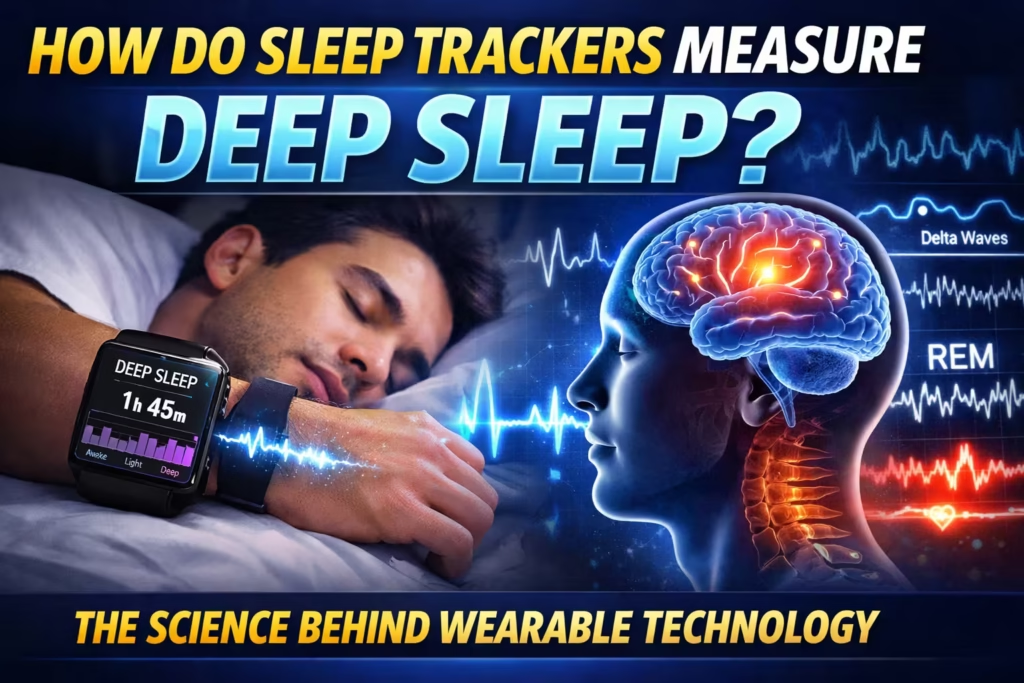
In recent years, the proliferation of wearable technology has transformed sleep from a biological mystery into a quantifiable metric. Millions of individuals wake up daily to check a score on their wrist or finger, seeking insights into the quality of their rest. Among the various metrics provided, deep sleep (NREM Stage 3) is often scrutinized the most due to its critical role in physical restoration, immune function, and memory consolidation.
However, a fundamental question remains for many users: How does a device on the wrist or finger know what is happening in the brain? Unlike clinical Polysomnography (PSG), which measures brain waves directly via Electroencephalography (EEG), consumer wearables rely on proxy physiological markers. This article explores the sophisticated mechanisms, sensors, and algorithms—specifically accelerometer sleep detection, heart rate variability (HRV), and skin temperature monitoring—that allow modern devices to estimate deep sleep stages.
The Foundations of Sleep Tracking Technology
To understand how sleep trackers work, one must first recognize that consumer wearables are estimating sleep stages based on secondary physiological signs rather than primary neurological activity. While the gold standard of sleep measurement involves monitoring electrical activity in the brain, wearables utilize a combination of motion sensing and optical biometrics to infer the user’s state.
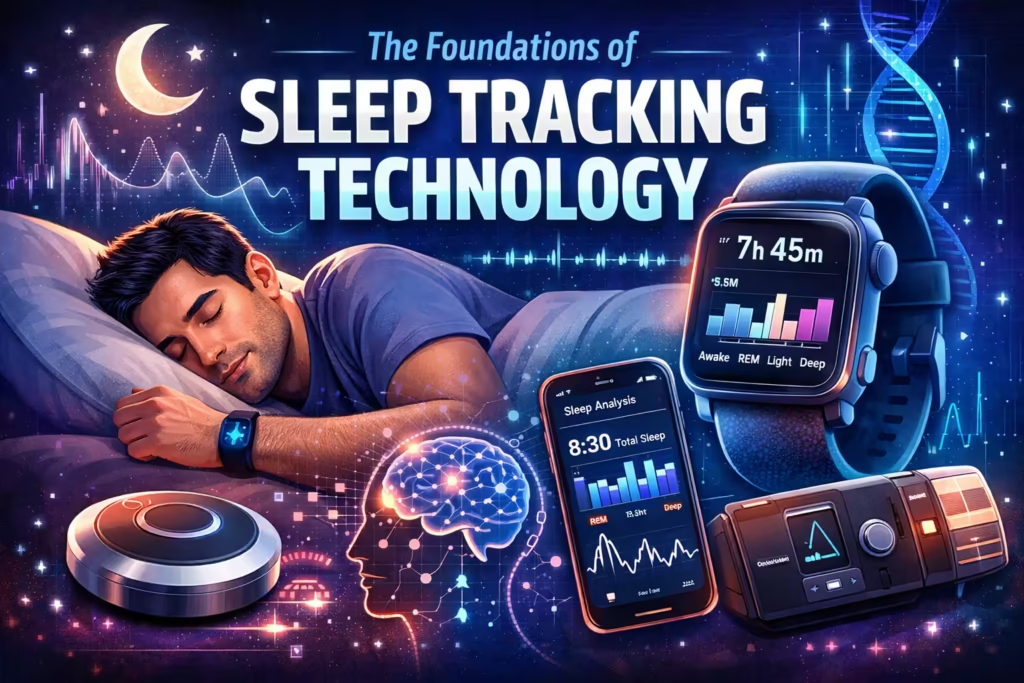
The process involves collecting raw data from various sensors embedded in the device, typically including:
- 3-Axis Accelerometers: To detect movement and orientation.
- Optical Heart Rate Sensors (PPG): To measure heart rate and pulse variance.
- Thermometers: To detect changes in skin temperature.
- Electrodermal Activity (EDA) Sensors: To measure skin conductance (in some advanced models).
These sensors feed data into proprietary sleep tracking algorithms, which process the inputs to categorize time spent in Light, Deep, and REM sleep.
TL;DR Summary
This article explores the sophisticated science behind how consumer wearables use motion, heart rate, and temperature sensors to estimate deep sleep stages. It contrasts wearable technology with clinical polysomnography, explaining the accuracy and limitations of modern sleep-tracking algorithms.
Actigraphy and Movement: The Role of the Accelerometer
The accelerometer explanation is central to the history and function of sleep tracking. Before heart rate monitors became standard in smartwatches, sleep tracking relied almost exclusively on actigraphy. Actigraphy is the continuous measurement of activity and rest cycles based on gross motor movement.
How Accelerometers Detect Sleep
Modern wearables utilize Micro-Electro-Mechanical Systems (MEMS) accelerometers. These microscopic sensors detect proper acceleration—essentially the force of gravity and the movement of the limb in three-dimensional space (X, Y, and Z axes).
When a user is awake, the accelerometer registers frequent, high-magnitude movements. As the user settles into bed, these movements decrease. The transition from wakefulness to Stage 1 (light sleep) is often characterized by a reduction in movement frequency. During deep sleep tracking, the accelerometer looks for periods of significant stillness. While the body is not paralyzed in NREM sleep (as it is in REM), the threshold for movement is significantly higher, and spontaneous movements are rare.
However, actigraphy sleep measurement alone has limitations. It struggles to distinguish between a user lying still while awake (quiescence) and actual sleep, often leading to overestimations of total sleep time. To solve this, modern devices fuse motion data with cardiac data.
Photoplethysmography (PPG) and Heart Rate Monitoring
Optical heart rate sleep monitoring is achieved through Photoplethysmography (PPG). This technology uses light-emitting diodes (LEDs)—typically green or red—to shine light into the skin. A photodetector measures the amount of light reflected back. Because blood absorbs light, the fluctuations in reflection allow the sensor to detect blood volume changes in the microvascular bed of tissue, effectively measuring the pulse.
Heart rate is a vital differentiator in smartwatch sleep stages detection. The transition into different sleep stages correlates with distinct cardiovascular patterns:
- Light Sleep: Heart rate begins to slow compared to wakefulness.
- Deep Sleep (N3): Heart rate reaches its lowest and most stable point of the night. The parasympathetic nervous system is dominant.
- REM Sleep: Heart rate becomes variable and can accelerate, often resembling waking levels despite the body being immobile.
Heart Rate Variability (HRV) in Deep Sleep Detection
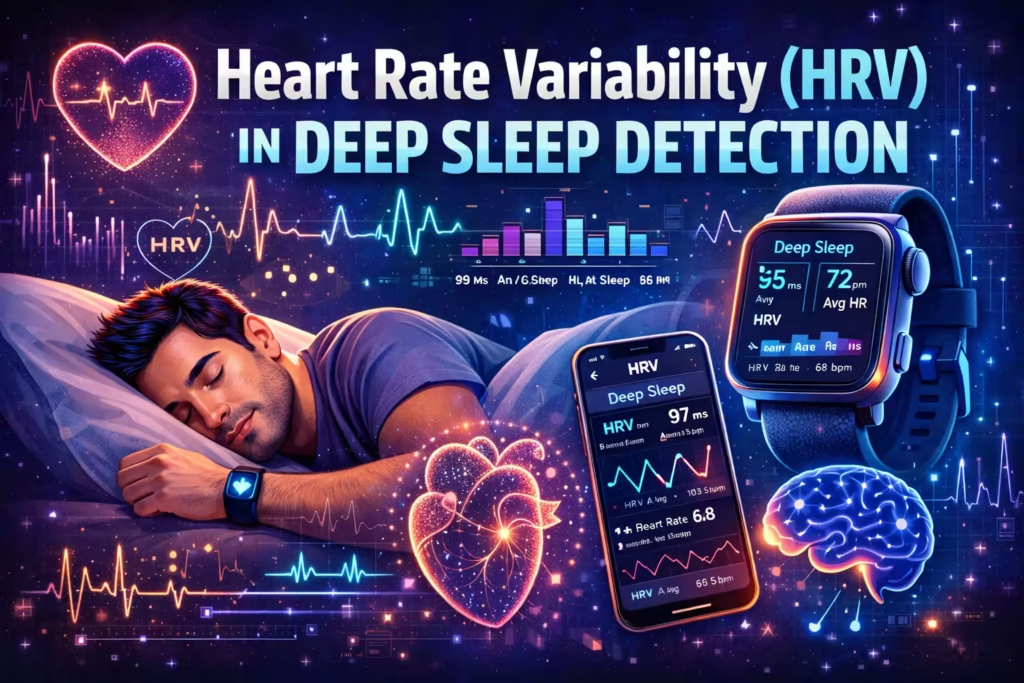
One of the most significant advancements in wearable sleep tracking devices is the integration of Heart Rate Variability (HRV) analysis. HRV refers to the variation in time intervals between consecutive heartbeats (the R-R interval).
The Link Between HRV and Deep Sleep
HRV is a non-invasive biomarker of the Autonomic Nervous System (ANS). The ANS consists of two branches: the Sympathetic (fight or flight) and the Parasympathetic (rest and digest).
During deep sleep, the body undergoes physical repair, and the parasympathetic nervous system is highly active. This dominance typically results in a regular heart rhythm but, somewhat counterintuitively, a specific pattern of variability that algorithms can detect. High HRV is generally associated with rest and recovery, while low HRV can indicate stress or sympathetic dominance.
By analyzing the beat-to-beat variance, heart rate variability sleep tracking allows algorithms to distinguish deep sleep from light sleep with greater precision than heart rate alone. If the accelerometer shows no movement, the heart rate is low, and the HRV exhibits patterns consistent with parasympathetic dominance, the algorithm classifies the epoch as deep sleep.
| Physiological Marker | Light Sleep Characteristics | Deep Sleep (N3) Characteristics | REM Sleep Characteristics |
|---|---|---|---|
| Movement (Accelerometer) | Low to Moderate; occasional shifting. | Very Low; skeletal muscles are relaxed but not paralyzed. | None (Atonia); muscle paralysis prevents acting out dreams. |
| Heart Rate (PPG) | Slowing down from waking levels. | Lowest and most stable of the night. | Variable; can increase erratically. |
| Heart Rate Variability (HRV) | Moderate variability. | Patterns reflecting Parasympathetic dominance. | Highly variable; fluctuating due to dream states. |
| Respiration Rate | Regular and rhythmic. | Slow, deep, and highly regular. | Fast and irregular. |
Skin Temperature and Electrodermal Activity
Advanced smart ring sleep tracking and high-end wrist wearables have begun incorporating skin temp sensors to refine staging accuracy. Body temperature regulation is closely tied to the circadian rhythm and sleep cycles.
Thermoregulation During Sleep
Leading up to sleep onset, the body’s core temperature drops. To facilitate this, blood vessels in the skin (particularly in the hands and feet) dilate to radiate heat away from the core. This results in an increase in peripheral skin temperature. During deep sleep, thermoregulation is maintained, and skin temperature remains relatively stable.
However, during REM sleep, the body’s ability to thermoregulate is temporarily suspended (poikilothermia). By monitoring minute fluctuations in skin temperature, algorithms can better differentiate between NREM (Deep/Light) and REM cycles. This is particularly effective in smart ring sleep tracking, as the finger is an ideal site for measuring peripheral vascular changes.
The “Black Box”: Sleep Tracking Algorithms
The hardware collects the data, but the algorithm overview explains how that data becomes a readable graph. Every manufacturer (e.g., Fitbit, Oura, Garmin, Apple) uses proprietary machine learning models.
These algorithms are trained on massive datasets where wearable data is paired with clinical Polysomnography (PSG) results. Through a process of supervised learning, the algorithm learns to recognize patterns. For example:
“Input profile: Zero movement + Heart Rate below resting baseline + High Parasympathetic HRV = High Probability of Deep Sleep.”
The algorithm processes data in “epochs” (typically 30-second blocks). For each epoch, it calculates the probability of the user being in Wake, Light, Deep, or REM. The sequence of these epochs forms the “hypnogram” users see in their app.
Deep Sleep Percentage Tracking
Once the algorithm categorizes the epochs, it sums the time spent in the “Deep” category to provide a total duration and percentage. Understanding these metrics is vital for users. To understand if your metrics fall within a healthy range, it is helpful to review What Is a Good Deep Sleep Percentage by Age? to contextualize the data provided by your tracker.
REM vs. Deep Sleep Tracking: The Challenge
Distinguishing REM vs deep sleep tracking is one of the most difficult tasks for a wrist-based device. In both stages, the body is immobile (or nearly so). The key differentiator lies in the autonomic signals.
- Deep Sleep: Quiet brain, stable heart, regular breathing.
- REM Sleep: Active brain, irregular heart, irregular breathing.
Without EEG to see the brain activity, trackers rely heavily on the variability of the heart rate and respiration rate (derived from PPG signal amplitude modulation) to tell these two distinct states apart. If a tracker relies only on an accelerometer (older models), it cannot distinguish REM from Deep sleep effectively.
Accuracy and Reliability: Consumer Tech vs. Polysomnography
How reliable are these measurements? When discussing sleep tracker accuracy and consumer sleep tracker reliability, it is necessary to compare them against Polysomnography vs sleep tracker data.
Polysomnography measures:
- EEG: Brain waves (Delta, Theta, Alpha, Beta).
- EOG: Eye movements (essential for REM detection).
- EMG: Muscle tone.
- ECG: Heart rhythm.
Wearables lack EEG, EOG, and EMG. Studies generally show that modern wearables are quite accurate at detecting “Sleep vs. Wake” (total sleep time) but have variable accuracy in “Sleep Staging” (separating Light, Deep, and REM).
EEG vs wearable sleep tracking comparisons often highlight that wearables tend to overestimate Light sleep and occasionally misclassify Deep sleep as Light sleep if the user has a naturally higher heart rate or autonomic dysfunction.
| Feature | Polysomnography (Clinical) | Consumer Sleep Tracker (Wearable) |
|---|---|---|
| Primary Data Source | Brain waves (EEG), Eye movement (EOG), Muscle tone (EMG) | Movement (Accelerometer), Pulse (PPG), HRV |
| Deep Sleep Detection | Direct measurement of Delta waves. | Inferred via heart rate stability and lack of motion. |
| Invasiveness | High; requires wires, electrodes, and a lab setting. | Low; passive wrist or finger wear. |
| Accuracy (Staging) | Gold Standard (~90% inter-scorer agreement). | Variable (typically 60-80% agreement with PSG). |
| Cost | Expensive per session. | One-time device purchase. |
Factors Affecting Deep Sleep Tracking Accuracy
Users looking for the best sleep tracker for deep sleep must understand that accuracy is not just about the device, but also about how it interacts with the body. Several external factors can skew the data:
1. Device Fit and Position
For the PPG sensor to work, it must be flush against the skin. If the band is too loose, ambient light can interfere with the sensor, or the sensor may lose contact during movement, creating gaps in data.
2. Skin Tone and Tattoos
Optical heart rate sleep monitoring relies on light reflection. Melanin absorbs green light, which can theoretically affect signal quality in darker skin tones, though modern algorithms have improved significantly in compensating for this. Dark tattoos directly over the sensor area can block the light entirely, rendering the heart rate data (and thus the sleep staging) inaccurate.
3. Physiological Anomalies
Arrhythmias (like atrial fibrillation) or autonomic nervous system disorders can confuse the HRV analysis, leading to incorrect staging. Additionally, alcohol consumption suppresses HRV and elevates heart rate, which trackers may misinterpret as Light sleep or even wakefulness, even if the user is unconscious.
The Future of Deep Sleep Tracking Technology
The field of deep sleep tracking technology is rapidly evolving. While current devices rely on PPG and accelerometers, the next generation of non REM sleep tracking tools explores new modalities.
Radar technology (using radio frequency sensing) is being integrated into bedside devices to detect respiration and movement without physical contact. Furthermore, “hearables” (smart earbuds) utilize in-ear EEG sensors to measure actual brain activity, potentially bridging the gap between EEG vs wearable sleep tracking accuracy.
Currently, the combination of accelerometer data, HRV analysis, and skin temperature provides a robust, albeit estimated, picture of sleep architecture. While not a replacement for medical diagnosis, these tools offer valuable trends for users aiming to optimize their recovery and health.
| Data Input | What It Measures | Role in Sleep Algorithm |
|---|---|---|
| 3-Axis Accelerometer | Gravitational force, linear acceleration. | Identifies sleep onset/offset and interruptions (awakenings). |
| Green LED PPG | Blood volume pulse (Heart Rate). | Distinguishes sleep stages based on HR zones. |
| Infrared PPG | Inter-beat intervals (HRV). | Critical for separating Deep Sleep (parasympathetic) from Light/REM. |
| NTC Thermistor | Skin surface temperature. | Confirms circadian alignment and differentiates REM (impaired thermoregulation). |
| Gyroscope | Rotational velocity. | Refines movement data, distinguishing between wrist rotation and whole-body movement. |
Expert Analysis and Educational Disclaimer
About the Analysis: This article synthesizes current engineering principles of wearable technology and physiological sleep science. It is intended to explain the mechanism of action behind consumer devices.
Disclaimer: Content provided here is for informational purposes only. Consumer sleep trackers are not medical devices and cannot diagnose sleep disorders such as sleep apnea or insomnia. If you suspect a sleep disorder, consult a medical professional for a clinical evaluation.
Frequently Asked Questions
How accurate are sleep trackers at detecting deep sleep?
Consumer sleep trackers generally have an accuracy rate of roughly 60% to 80% when compared to Polysomnography (PSG) for sleep staging. They are highly accurate at detecting Total Sleep Time but may struggle to precisely pinpoint the exact start and end of deep sleep cycles.
Why does my tracker show no deep sleep?
If a tracker shows little to no deep sleep, it may be due to a loose fit, sensor error, or physiological factors like alcohol consumption, stress, or age (deep sleep naturally decreases with age). It does not always mean you obtained zero deep sleep, but rather that the device did not detect the associated physiological markers.
Can a smart ring measure sleep better than a watch?
Smart rings often have an advantage in measuring heart rate and oxygen saturation because the arteries in the finger are closer to the surface than those in the wrist. This can result in clearer PPG signals and potentially more accurate sleep staging data.
Does the accelerometer or heart rate monitor matter more for sleep tracking?
Modern algorithms rely more heavily on heart rate and HRV for staging (Deep vs. Light vs. REM). The accelerometer is primarily used to determine when you fall asleep (Sleep Onset) and when you wake up, as well as to detect restlessness.
Do sleep trackers measure brain waves?
Standard wrist-based and finger-based trackers do not measure brain waves. They infer brain states based on heart rate, movement, and temperature. Only specific headband devices equipped with EEG sensors can measure brain waves.
What is the difference between actigraphy and PPG sleep tracking?
Actigraphy relies solely on movement data to determine sleep/wake patterns. PPG (Photoplethysmography) uses light to measure heart rate and blood flow. Combining both allows for the estimation of sleep stages, whereas actigraphy alone usually only estimates total sleep time.
How does skin temperature affect sleep tracking data?
Skin temperature changes follow a circadian rhythm. A drop in core temperature (and rise in skin temperature) signals sleep onset. Tracking these temperature deviations helps algorithms confirm that the user is actually asleep and assists in distinguishing REM sleep phases.