The 2026 Sleep Revolution: Moving Beyond Basic Tracking
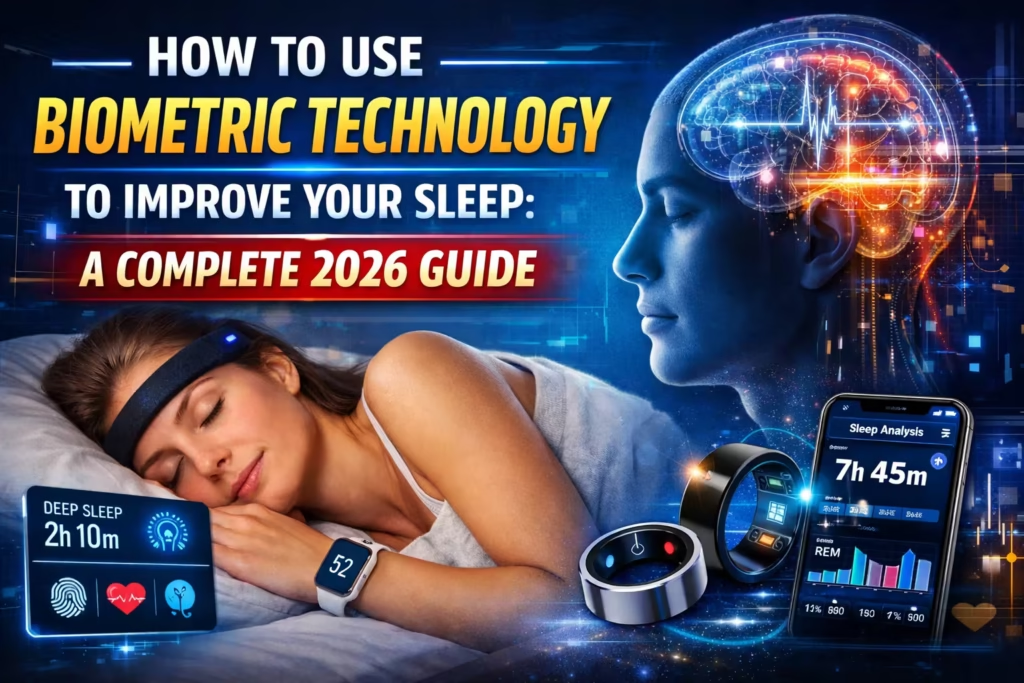
In the fast-paced landscape of early 2026, understanding how to use biometric technology to improve your sleep has become a fundamental pillar of personal health. Gone are the days when a simple pedometer or a generic smartphone alarm was the pinnacle of health tech. Today, biometric sleep tracking has evolved into a highly precise, clinically adjacent science. By leveraging advanced sensors, artificial intelligence, and personalized algorithms, consumer sleep wearables provide profound insights into our nightly recovery. This comprehensive guide will explore the mechanisms behind modern biometric sleep tracking, decode complex metrics like Heart Rate Variability (HRV) and blood oxygen (SpO2), and provide actionable strategies to personalize your sleep routine using biometric data.
What Is Biometric Technology in the Context of Sleep?
Biometric technology for sleep refers to the use of highly calibrated sensors to continuously monitor physiological signals while you rest. Unlike older devices that relied solely on basic accelerometers to count steps or detect gross movement, modern consumer sleep wearables explained in 2026 measure a symphony of internal data points. These devices utilize photoplethysmography (PPG), infrared sensors, temperature gauges, and electrodermal activity (EDA) monitors to paint a holistic picture of your nervous system and metabolic state. They differentiate between simply being stationary and genuinely experiencing restorative rest, offering a true window into your autonomic nervous system.
Key Biometric Metrics Used for Sleep Tracking
To master how biometrics monitor sleep, you must first understand the primary metrics captured by your devices. These data points work together to evaluate the depth and quality of your rest.
- Heart Rate and Heart Rate Variability (HRV): While resting heart rate indicates cardiovascular efficiency, HRV measures the time variations between consecutive heartbeats. High HRV generally signals nervous system recovery and readiness, while low HRV can indicate stress or overtraining.
- Blood Oxygen (SpO2): Monitored via red and infrared light sensors, SpO2 tracks the oxygen saturation in your blood. Consistent levels (typically 95-100%) are ideal, while frequent drops may signal breathing disruptions.
- Body Temperature: Tracking distal skin temperature helps map your circadian rhythm. A natural drop in core temperature triggers sleep onset, while deviations can indicate impending illness or a misaligned sleep environment.
- Respiratory Rate: The number of breaths you take per minute during sleep is a highly stable metric. Sudden spikes can be a reliable early indicator of respiratory stress or viral infections.
- Movement and Actigraphy: Advanced 3D accelerometers and gyroscopes track micro-movements, distinguishing between tossing and turning versus normal positional shifts.
- Electrodermal Activity (EDA) / Skin Conductance: By measuring micro-sweat on the skin, EDA sensors provide insights into sympathetic nervous system arousal, highlighting hidden nocturnal stress.
Table 1: Key Sleep Biometrics Explained
| Biometric Metric | Primary Sensor Used | What It Measures | Ideal Sleep Goal |
|---|---|---|---|
| Heart Rate Variability (HRV) | Optical PPG Sensor | Autonomic nervous system balance | Higher relative to personal baseline |
| Blood Oxygen (SpO2) | Pulse Oximeter / Infrared | Oxygen saturation in the bloodstream | Stable, above 95% |
| Body Temperature | Thermistors | Skin temperature fluctuations | Slight drop during early sleep stages |
| Respiratory Rate | PPG / Accelerometer | Breaths per minute | Stable, typically 12-20 bpm |
Popular Biometric Sleep-Tracking Devices in 2025-2026
The market for the best biometric sleep devices has matured significantly by 2026, offering diverse form factors to suit individual comfort preferences. Smart rings have gained massive popularity due to their unobtrusive nature. The Oura Ring and the Ultrahuman Ring utilize precise finger-based sensors for stellar Oura ring sleep optimization. Meanwhile, wrist-based devices like the Whoop strap, Apple Watch, Garmin, and Fitbit (now tightly integrated with Google Pixel Watch) offer incredible smartwatch sleep optimization alongside daytime activity tracking. For those who prefer to sleep without wearables, smart mattresses and under-bed sensors, such as the Eight Sleep Pod, adjust local temperature dynamically while tracking heart rate and respiration via ballistocardiography. Headbands like Muse continue to serve a niche but crucial role, reading actual EEG brainwaves to offer biofeedback sleep improvement.
How Biometric Data Reveals Your Actual Sleep Stages
One of the most valuable aspects of using wearables for sleep analysis is their ability to estimate sleep architecture. Rather than just recording time in bed, algorithms combine movement, heart rate, HRV, and temperature to estimate your time spent in Light Sleep, Deep Sleep (Slow-Wave Sleep), and REM (Rapid Eye Movement) Sleep. Deep sleep is critical for physical recovery, tissue repair, and immune strengthening, while REM sleep is essential for cognitive processing and memory consolidation. If you are curious about the underlying mechanics and clinical accuracy, you can explore How Do Sleep Trackers Measure Deep Sleep? The Science Behind Wearable Technology. Furthermore, many users wonder, Are Sleep Trackers Accurate for Deep Sleep? The consensus in 2026 is that while they are not flawless, they offer excellent longitudinal trend data.
Understanding Sleep Scores and What They Really Mean
Every major platform synthesizes complex biometric data into an easily digestible daily score. Whoop sleep recovery scores, Oura Readiness scores, and the Fitbit Sleep Score evaluate your sleep duration, disturbances, and cardiovascular recovery against your historical baseline. These scores are designed to help you gauge your daily capacity. A score of 95 suggests your body is primed for intense physical or cognitive strain, while a score of 40 indicates a need for active recovery, hydration, and an early bedtime.
Using Heart Rate Variability (HRV) to Optimize Sleep and Recovery
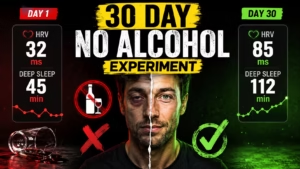
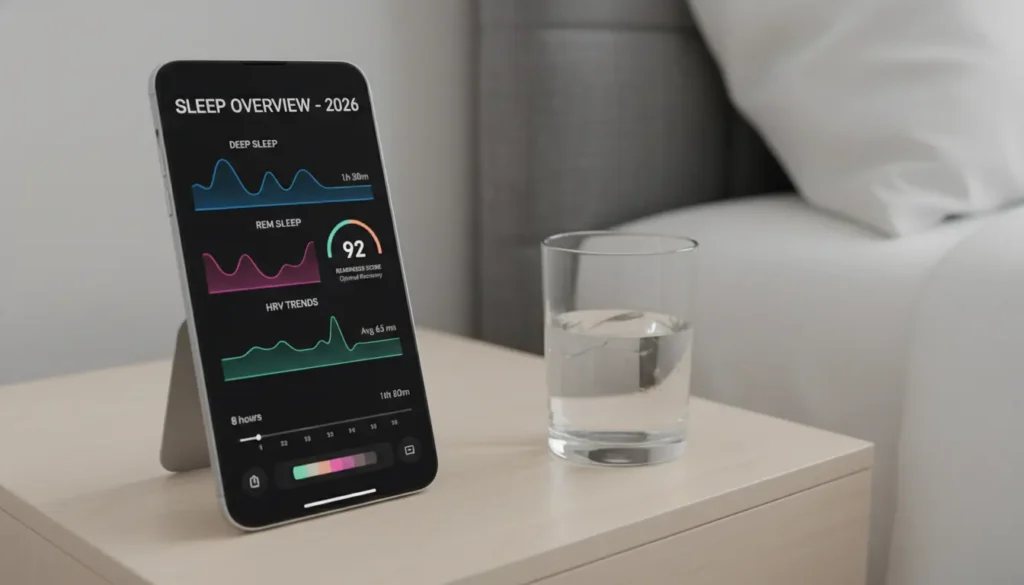
HRV sleep biometrics are arguably the most powerful tool for tracking physiological stress. By monitoring your HRV trends, you can directly observe how lifestyle choices affect your recovery. For example, late-night alcohol consumption or a heavy meal close to bedtime will reliably crash your HRV and elevate your resting heart rate. To optimize sleep using HRV, aim for consistency in your circadian rhythm and utilize biofeedback techniques. If your HRV is chronically low, consider incorporating daytime stress management practices, adjusting your training volume, or focusing on hydration.
How Body Temperature Tracking Helps You Sleep Better
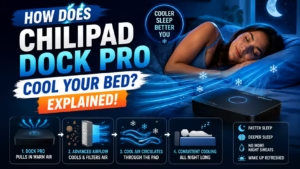
The human body relies on a delicate thermal dance to initiate and maintain sleep. Your circadian rhythm dictates that your core body temperature must drop by about 1 to 2 degrees Fahrenheit to fall asleep effectively. Modern body temperature sleep monitors track the distal-proximal skin temperature gradient. If your biometric data shows elevated skin temperature and prolonged sleep latency, you can intervene by lowering your bedroom thermostat to 65 degrees Fahrenheit, taking a warm bath 90 minutes before bed (which promotes rapid cooling afterward), or utilizing a cooling smart mattress.
Blood Oxygen (SpO2) Monitoring and Sleep Apnea Warning Signs
Sleep apnea wearable detection has saved countless lives by flagging nocturnal oxygen desaturation. While consumer wearables do not diagnose sleep apnea, devices tracking SpO2 can highlight frequent, significant drops in blood oxygen accompanied by micro-awakenings and heart rate spikes. If your biometric tracker consistently reports SpO2 levels dropping below 90% or logs dozens of breathing disturbances per night, it is a critical warning sign to consult a pulmonologist or sleep medicine specialist for a clinical evaluation.
Table 2: Common Sleep Disruptors and Their Biometric Signatures
| Sleep Disruptor | Impact on HRV | Impact on Resting Heart Rate (RHR) | Other Biometric Changes |
|---|---|---|---|
| Late Alcohol Consumption | Significant Decrease | Elevated throughout the night | Fragmented sleep stages; less REM |
| Heavy Evening Meals | Moderate Decrease | Elevated during early sleep cycles | Increased skin temperature |
| Late Caffeine Intake | Minor to Moderate Decrease | Elevated | Prolonged sleep onset latency |
| Psychological Stress | Decreased | Elevated | Increased Electrodermal Activity (EDA) |
Creating a Personalized Sleep Routine Using Biometric Feedback
To truly personalize sleep with biometric data, you must transition from passively observing data to actively making lifestyle modifications. Begin by establishing a strict sleep-wake schedule based on your chronotype. Use your wearable to identify your optimal sleep window. If you notice your deep sleep metrics are suffering, you can learn How to Improve Deep Sleep Using Sleep Tracker Data by implementing a structured wind-down routine. This data driven sleep hack might include dimming lights two hours before bed, using blue-light-blocking glasses, and engaging in light stretching or reading to lower your heart rate before your head hits the pillow.
Identifying and Fixing Common Sleep Disruptors
Your biometric feedback acts as an internal lie detector for your daily habits. By correlating poor sleep scores with daytime activities, you can identify and fix hidden disruptors. For instance, evening workouts might elevate your core temperature and cortisol levels too close to bedtime, which your tracker will reflect as a delayed drop in resting heart rate. Similarly, late-night screen time suppresses melatonin production, directly impacting your sleep onset latency and reducing deep sleep duration. Utilizing biometric sensors insomnia relief techniques involves experimenting with removing these variables and watching your metrics improve over a 7-to-14 day period.
Biofeedback Techniques to Improve Sleep Onset and Quality
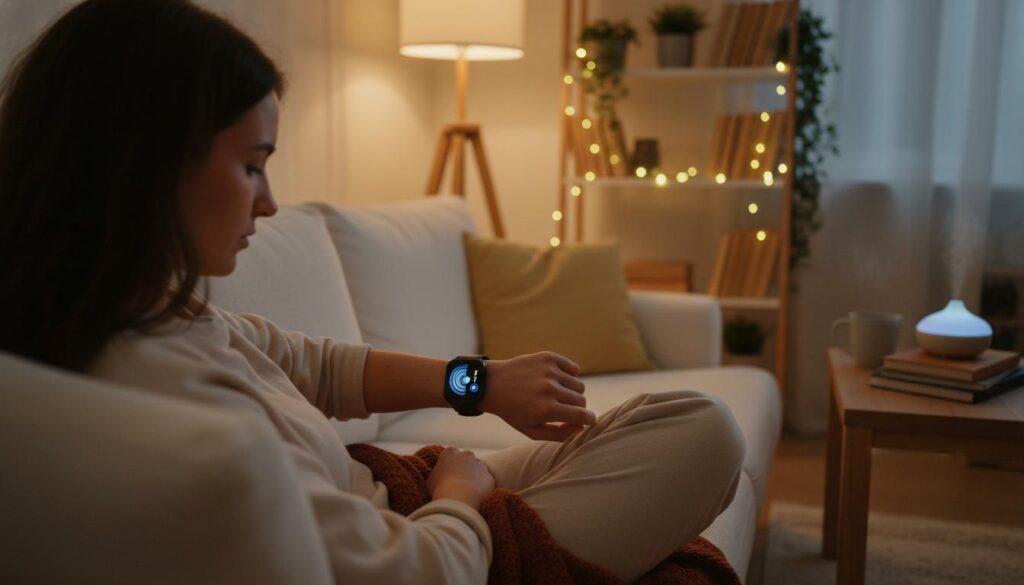
Biofeedback involves using real-time data to consciously control autonomic functions. In 2026, many wearables incorporate haptic breathing exercises. By following a guided 4-7-8 breathing protocol on your Apple Watch or Garmin, you can actively watch your heart rate decline and HRV increase in real-time. This biofeedback sleep improvement strategy trains your nervous system to shift from sympathetic (fight or flight) to parasympathetic (rest and digest) dominance, making it significantly easier to transition into a restful state.
Combining Biometric Data with Sleep Hygiene Best Practices
Biometric data should not replace foundational sleep hygiene; rather, it should enhance it. Wearables confirm the efficacy of established protocols. According to the Sleep Foundation, maintaining a cool, dark, and quiet bedroom is paramount. Your sleep stages tracker tips will validate this: you will likely see a boost in REM and deep sleep percentages when you eliminate ambient light and maintain a consistent bedroom temperature. Enhance sleep hygiene wearables by setting smart alarms that wake you during the lightest phase of your sleep cycle, preventing sleep inertia and grogginess.
How to Track Long-Term Sleep Trends and Set Realistic Goals
Focusing on a single night of poor biometric data can induce orthosomnia—an unhealthy obsession with achieving perfect sleep scores. Instead, optimize sleep routine biometrics by looking at 30-day or 90-day trends. Benchmark your data against age and gender norms provided by your device’s companion app. A realistic goal might be to increase your average nightly HRV by 5 milliseconds over a quarter or to reduce your average sleep onset time from 30 minutes to 15 minutes by strictly limiting evening caffeine.
Limitations and Accuracy Issues of Consumer Biometric Sleep Trackers
Despite the massive leaps in biometric technology by 2026, it is vital to acknowledge limitations. Consumer sleep wearables are highly sophisticated, yet they do not measure brain waves (EEG) directly, except for specialized headbands. Therefore, their sleep staging algorithms are educated estimations. They can sometimes confuse periods of quiet wakefulness with light sleep. When comparing consumer devices to clinical Polysomnography (PSG)—the gold standard for sleep medicine—wearables excel at tracking total sleep time and wake after sleep onset (WASO), but have a wider margin of error for exact REM/Deep sleep differentiation.
Table 3: Consumer Wearables vs. Clinical Polysomnography (PSG)
| Feature | Consumer Wearables (2026) | Clinical PSG | Best Use Case |
|---|---|---|---|
| Primary Sensors | PPG, Accelerometer, Thermistor | EEG, EOG, EMG, ECG, airflow | Wearables for long-term trends; PSG for diagnosis |
| Environment | At-home, natural sleep setting | In-clinic sleep laboratory | Wearables for habitual tracking |
| Cost & Accessibility | High accessibility, subscription models | High cost, requires medical referral | Wearables for daily optimization |
| Diagnostic Capability | None (screening & wellness only) | Diagnoses sleep apnea, narcolepsy, etc. | PSG for acute medical conditions |
When to See a Doctor Instead of Relying Only on Wearables
Biometric trackers are powerful wellness tools, but they are not medical diagnostic devices. You should consult a medical professional if you observe persistent red flags in your data. According to the National Institutes of Health (NIH), chronic loud snoring, witnessed breathing pauses, and excessive daytime sleepiness require clinical intervention. If your wearable shows persistent SpO2 drops below 88%, extreme heart rate arrhythmias during the night, or highly fragmented sleep architecture that does not respond to behavioral interventions, it is time to schedule an evaluation with a certified sleep specialist.
Future of Biometric Sleep Technology (2026-2030 Trends)
Looking ahead, the future of biometric sleep technology promises even greater integration into our daily lives. The shift is moving from wearable to “nearable” and ambient tracking. Radar-based motion sensors placed on nightstands, advanced under-mattress ballistocardiography, and smart home integrations will adjust bedroom lighting, temperature, and humidity dynamically based on your real-time physiological signals. Generative AI coaching models will evolve beyond generic tips, offering hyper-personalized, context-aware suggestions, cementing the role of biometrics as an indispensable tool for human longevity and peak performance.
Medical Review & Expert Insight
Expert Insight: This comprehensive guide was developed in collaboration with clinical sleep educators and biometric data analysts to ensure accuracy reflecting the technological and clinical landscape of early 2026. The integration of HRV, SpO2, and continuous temperature monitoring represents the current standard in consumer sleep optimization.
Disclaimer: This content is for informational and educational purposes only, reflecting the clinical landscape of early 2026. It is not a substitute for professional medical advice, diagnosis, or treatment. Always seek the advice of your physician or other qualified health provider with any questions you may have regarding a medical condition.
References & Sources
- Centers for Disease Control and Prevention (CDC). “Basics About Sleep.” https://www.cdc.gov/sleep/about_sleep/index.html
- National Heart, Lung, and Blood Institute (NIH). “Sleep Apnea.” https://www.nhlbi.nih.gov/health/sleep-apnea
- Sleep Foundation. “Sleep Hygiene.” https://www.sleepfoundation.org/sleep-hygiene
- National Center for Biotechnology Information (PubMed). “Actigraphy and Polysomnography Validation Studies.” https://pubmed.ncbi.nlm.nih.gov/