
In the fast-paced world of 2026, understanding how to build a perfect sleep routine has never been more critical for optimal health, cognitive function, and emotional well-being. Sleep is not merely a passive state of rest; it is an active, dynamic process essential for physical repair and mental consolidation. If you are struggling with fatigue or simply want to optimize your nights, learning how to create a sleep routine is the foundational step toward transformative health. This comprehensive guide will walk you through the science-backed sleep routine strategies, daily habits for good sleep, and the perfect bedtime routine for adults.

The Science of Sleep and Circadian Rhythms
Before diving into a step-by-step sleep routine, it is crucial to understand the biological mechanisms that govern our sleep-wake cycles. Our circadian rhythm, a roughly 24-hour internal clock running in the background of our brain, dictates sleepiness and wakefulness. Light exposure, temperature, and daily routines heavily influence this clock. According to the National Institutes of Health (NIH) on Circadian Rhythms, disruptions to this internal clock are linked to various chronic health conditions.
| Sleep Stage | Percentage of Night | Primary Function |
|---|---|---|
| N1 (Light Sleep) | 5% | Transition from wakefulness to sleep. |
| N2 (Light Sleep) | 45-55% | Heart rate slows, body temperature drops. Memory consolidation begins. |
| N3 (Deep Sleep) | 15-25% | Physical restoration, tissue repair, immune system strengthening. |
| REM Sleep | 20-25% | Dreaming, emotional regulation, complex problem-solving. |
Understanding these stages highlights why a structured sleep routine guide is essential. You need adequate time in both deep sleep and REM sleep to wake up feeling refreshed. Tracking these stages has become easier with advanced wearables. If you are curious about tracking accuracy, you can explore the Oura vs Whoop Deep Sleep Accuracy comparison to find the best tool for monitoring your progress.
Morning Routine for Better Sleep
It might sound counterintuitive, but the perfect sleep schedule formula begins the moment you wake up. A morning routine for better sleep sets the tone for your circadian rhythm for the entire day.
1. Consistent Wake Time
The cornerstone of how to fix sleep schedule and routine issues is waking up at the exact same time every day, even on weekends. This consistency anchors your circadian rhythm, making it easier to fall asleep at night. To build healthy sleep habits, resist the urge to hit the snooze button. Sticking to a consistent sleep routine tips the scales in your favor.
2. Immediate Light Exposure
Exposure to bright, natural light within the first 30 to 60 minutes of waking stops the production of melatonin (the sleep hormone) and boosts cortisol, which naturally wakes you up. The CDC guidelines on sleep hygiene emphasize the importance of daytime light exposure for regulating the sleep-wake cycle.
| Morning Action | Timing | Benefit for Sleep Routine |
|---|---|---|
| Wake Up | Consistent Daily Time | Anchors circadian rhythm |
| Sunlight Exposure | Within 30 mins | Halts melatonin, boosts alertness |
| Hydration | Immediately | Kickstarts metabolism |
| Caffeine Intake | Delay 90-120 mins | Prevents afternoon adenosine crash |
Daily Habits for Good Sleep
Your daytime activities heavily influence the quality of your evening rest. Building a sleep routine for better energy requires mindful choices throughout the day.
1. Strategic Caffeine and Diet
Caffeine has a half-life of about 5 to 7 hours. Consuming caffeine late in the afternoon can drastically reduce deep sleep. Aim to cut off caffeine by 2 PM. Furthermore, eating a heavy meal too close to bedtime forces your body to focus on digestion rather than restorative sleep. Evening habits that improve sleep start with a lighter dinner at least three hours before bed.
2. Physical Activity
Regular exercise is a potent sleep aid. However, intense workouts too close to bedtime can elevate your core body temperature and heart rate, making it harder to fall asleep. Aim for moderate to vigorous exercise in the morning or early afternoon. For busy professionals, integrating movement throughout the day is a key strategy in a sleep routine for busy people.
The Ideal Night Routine for Better Sleep
As evening approaches, your focus should shift to a wind down routine before bed. This is where you create perfect bedtime ritual practices that signal to your brain that it is time to sleep.

The Transition Phase
An evening routine for deep sleep requires a transition phase. Dim the lights in your home to mimic the setting sun. This encourages natural melatonin production. In 2026, smart home lighting systems make this sleep hygiene routine 2026 seamless by automatically adjusting color temperature.
Implementing Sleep Rules
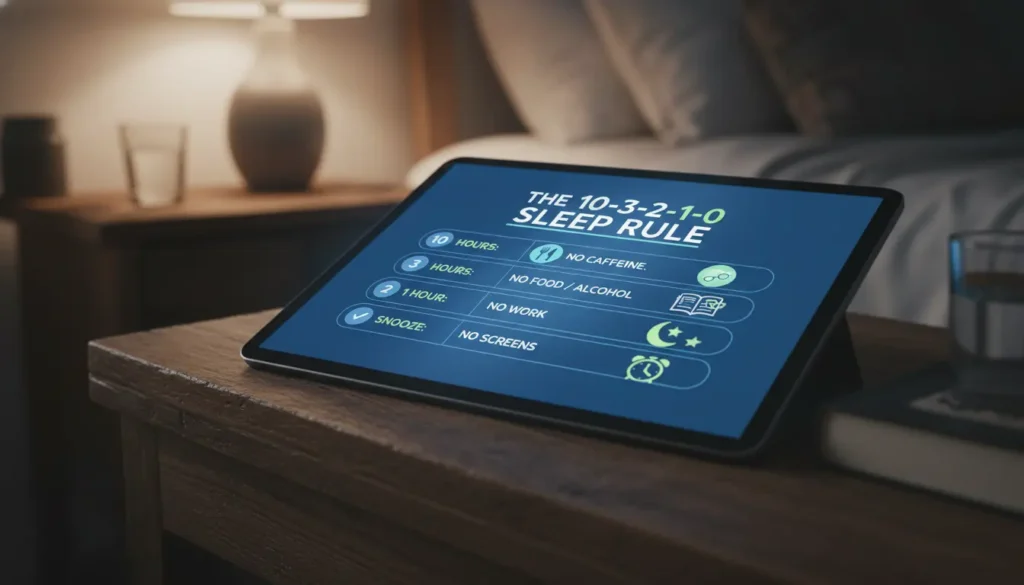
Many adults find success using structured frameworks to build their routines. A popular method is the 10-3-2-1-0 rule. If you are unsure which framework works best, read about the 10-3-2-1-0 vs. 3-2-1 Sleep Rule Explained. These rules provide a clear bedtime checklist for adults.
| Hours Before Bed | Action to Take | Physiological Reason |
|---|---|---|
| 10 Hours | No more caffeine | Allows caffeine to clear from receptors |
| 3 Hours | No more heavy meals or alcohol | Prevents digestive disruptions and REM suppression |
| 2 Hours | No more work | Reduces cognitive arousal and stress |
| 1 Hour | No more screens (blue light) | Allows melatonin production to peak naturally |
| 0 Hours | No hitting snooze in the AM | Maintains sleep schedule integrity |
Designing Your Bedroom Environment
Your sleep environment is critical. To reset sleep routine naturally, your bedroom must be optimized for rest. It should be cool, dark, and quiet. The optimal room temperature for sleep is typically between 60 to 67 degrees Fahrenheit (15 to 19 degrees Celsius).
Bedding and Comfort
Your physical comfort directly impacts sleep architecture. Ensure your mattress provides adequate support. Additionally, neck alignment is vital. If you experience neck pain, you might wonder about your pillow setup; find out more by reading Is It Better to Sleep with a Pillow or Without One?.
How to Make Sleep Routine Stick: Long Term Success
Knowing how to stick to a sleep schedule is often harder than creating one. Long term sleep routine success relies on flexibility and self-compassion. If you have an off night, do not panic. Simply return to your structured sleep routine guide the next day. The optimal sleep schedule for adults is one that can be maintained consistently.
Special Considerations
Different demographics face unique challenges. For example, the best sleep routine women can adopt often accounts for hormonal fluctuations throughout the menstrual cycle, which can affect core body temperature and sleep architecture. Additionally, maintaining a sleep routine with children requires adapting your schedule to align with family needs while prioritizing your own wind-down time.
How to Improve Sleep Habits: Final Thoughts
Building a night time routine for quality sleep is a deeply personal journey. There is no one-size-fits-all, but by utilizing a science backed sleep routine framework, you can discover the best daily sleep schedule for your biology. Remember to utilize the Best Night Routine for Deep Sleep practices, limit late-night screen time, and maintain a consistent wake time. For further information on managing sleep disorders, always consult resources like the National Heart, Lung, and Blood Institute (NHLBI).
Expert EEAT Block
Medical Review & Expert Insight: The strategies outlined in this guide are based on chronobiology and sleep medicine principles established by leading health organizations. Integrating a structured wind-down phase and consistent wake times are scientifically proven methods to enhance sleep architecture.
Disclaimer: This content is for informational and educational purposes only, reflecting the clinical landscape of early 2026. It is not a substitute for professional medical advice, diagnosis, or treatment.
References & Sources
- National Institutes of Health (NIH) on Circadian Rhythms: https://www.nigms.nih.gov/education/fact-sheets/Pages/circadian-rhythms.aspx
- CDC Guidelines on Sleep Hygiene: https://www.cdc.gov/sleep/about_sleep/sleep_hygiene.html
- National Heart, Lung, and Blood Institute (NHLBI) on Sleep Deprivation: https://www.nhlbi.nih.gov/health/sleep-deprivation
- Biometric Sleep – Oura vs Whoop Deep Sleep Accuracy: https://biometricsleep.com/oura-vs-whoop-deep-sleep-accuracy-2026/
- Biometric Sleep – Is It Better to Sleep with a Pillow or Without One?: https://biometricsleep.com/is-it-better-to-sleep-with-a-pillow-or-without/
- Biometric Sleep – 10-3-2-1-0 vs. 3-2-1 Sleep Rule Explained: https://biometricsleep.com/10-3-2-1-0-vs-3-2-1-sleep-rule-explained/
- Biometric Sleep – Best Night Routine for Deep Sleep: https://biometricsleep.com/best-night-routine-for-deep-sleep/
Frequently Asked Questions (SEO Optimized)
How long does it take to build a healthy sleep routine?
It typically takes 2 to 4 weeks of consistent practice to fully reset your circadian rhythm and make a new sleep routine feel natural.
What is the perfect bedtime routine for adults?
The perfect bedtime routine involves dimming lights, disconnecting from screens 1-2 hours before bed, engaging in a relaxing activity like reading or gentle stretching, and keeping a consistent sleep schedule.
How can I fix a ruined sleep schedule quickly?
The fastest way to fix a sleep schedule is to enforce a strict, consistent wake-up time every day and expose yourself to bright natural sunlight immediately upon waking, regardless of how tired you feel.
Is it better to read or watch TV before bed?
Reading a physical book or using an e-reader without blue light is significantly better than watching TV. The blue light from televisions and phones suppresses melatonin production.
How do I stick to a sleep schedule on weekends?
To stick to a sleep schedule on weekends, aim to wake up within 30 minutes of your weekday wake time. Sleeping in late disrupts your internal clock, causing ‘social jetlag’.
What should be on my bedtime checklist?
A good bedtime checklist includes: lowering the thermostat to 60-67F, turning off overhead lights, brushing teeth, completing a skincare routine, and engaging in 15 minutes of mindfulness or reading.
Can I build a sleep routine if I work shifts?
Yes. For shift workers, building a sleep routine involves creating an artificial nighttime environment using blackout curtains and wearing blue-light-blocking glasses at the end of your shift before going to sleep.