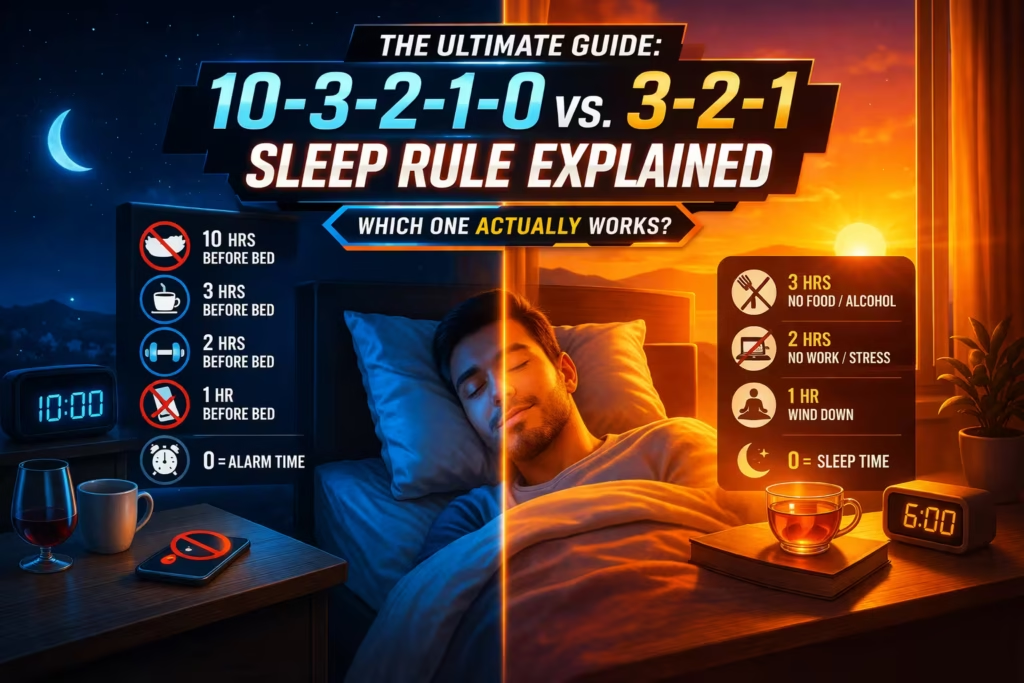
In early 2026, the conversation surrounding sleep hygiene has shifted dramatically from vague advice like ‘get more rest’ to highly structured, numerical bedtime routines. With sleep deprivation continuing to be a recognized public health crisis, methods that provide clear, actionable boundaries have surged in popularity across platforms like TikTok and Instagram, as well as within clinical sleep medicine recommendations. Two of the most prominent frameworks dominating the sleep wellness space are the 10-3-2-1-0 sleep rule and the 3-2-1 sleep rule. Both methods aim to optimize your body’s natural circadian rhythm by gradually reducing physiological and psychological arousal before bed. But when comparing the 10-3-2-1-0 vs 3-2-1 sleep rule, which one actually works better for the average person, and what is the concrete science behind them?
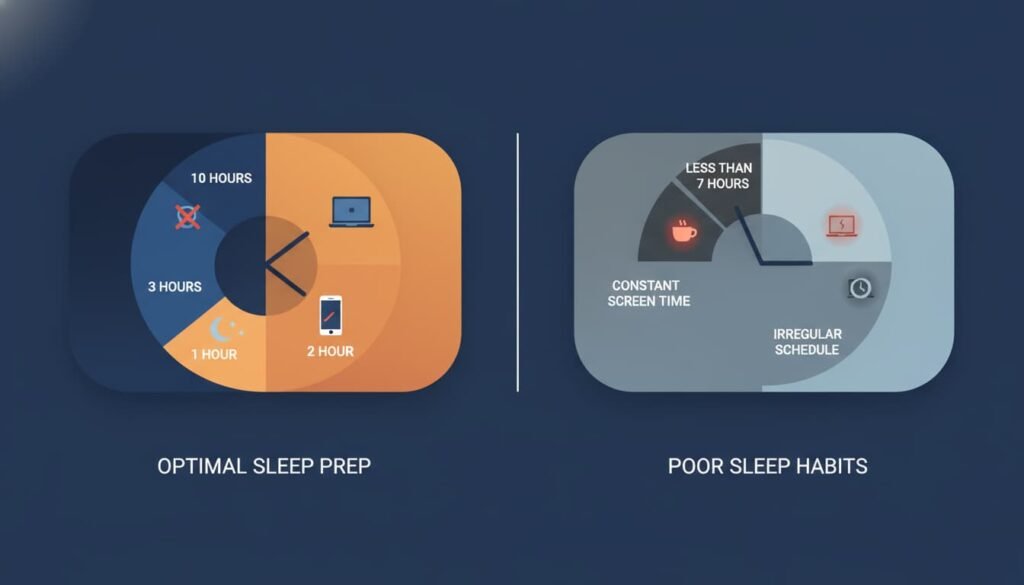
Introduction to Sleep Rules: What Are 10-3-2-1-0 and 3-2-1?
For years, individuals struggling with sleep latency (the time it takes to fall asleep) and sleep fragmentation (waking up during the night) have searched for reliable frameworks. The 10-3-2-1-0 bedtime routine and the 3-2-1 sleep technique are behavioral countdowns designed to eliminate sleep-disrupting habits at strategic intervals before bedtime. These rules have gained massive traction because they transform the abstract concept of ‘sleep hygiene’ into a tangible checklist. Medical professionals increasingly recommend these routines because they address the five primary culprits of modern insomnia: caffeine overconsumption, late-night digestion, alcohol-induced REM suppression, work-related cognitive stress, and blue light exposure. By breaking down the evening into manageable phases, these rules help signal to the brain that the day is concluding.
The 10-3-2-1-0 Sleep Rule Explained in Detail
The 10-3-2-1-0 sleep rule is a comprehensive, all-day approach to sleep hygiene. It is often attributed to fitness experts like Craig Ballantyne (frequently searched as the ’10-3-2-1-0 method Craig’), but its components are deeply rooted in established chronobiology. This rule acts as a full-day countdown to optimal rest. Here is the full breakdown:
- 10 Hours Before Bed: No More Caffeine. Caffeine is a central nervous system stimulant with a half-life of roughly 5 to 6 hours for the average adult. By cutting off caffeine 10 hours before your target sleep time, you allow your body sufficient time to clear the stimulant from your bloodstream, allowing adenosine (the chemical responsible for sleep pressure) to bind to its receptors naturally.
- 3 Hours Before Bed: No More Food or Alcohol. Consuming heavy meals late in the evening forces your digestive system to work overtime, raising your core body temperature when it should be dropping to facilitate sleep. Additionally, while alcohol is a depressant that might help you lose consciousness quickly, it severely disrupts REM (Rapid Eye Movement) sleep and leads to frequent awakenings in the second half of the night.
- 2 Hours Before Bed: No More Work. Cognitive arousal is a primary driver of sleep-onset insomnia. Shutting down work emails, spreadsheets, and stressful problem-solving tasks two hours before bed allows your cortisol (stress hormone) levels to drop, shifting your nervous system from a sympathetic (fight-or-flight) state to a parasympathetic (rest-and-digest) state.
- 1 Hour Before Bed: No More Screens. Smartphones, tablets, and televisions emit bright artificial light, particularly in the blue spectrum. This light tricks your brain’s suprachiasmatic nucleus into thinking the sun is still up, aggressively suppressing the natural secretion of melatonin, the hormone that regulates your sleep-wake cycle.
- 0 Snoozes in the Morning. Hitting the snooze button fragments your final cycle of sleep, plunging you back into a new sleep cycle that you will inevitably interrupt a few minutes later. This results in severe sleep inertia—that groggy, disoriented feeling that can last for hours after waking up.
The 3-2-1 Sleep Rule Explained
For those who find the 10-3-2-1-0 sleep hygiene checklist too rigid or difficult to track throughout the day, the 3-2-1 sleep method offers a streamlined, evening-focused alternative. This 3-2-1 bedtime hack isolates the most critical hours leading up to sleep, making it a highly accessible starting point for beginners. The breakdown is as follows:
- 3 Hours Before Bed: No Food or Alcohol. Identical to the longer rule, this ensures your digestion is mostly complete and your core body temperature can adequately cool.
- 2 Hours Before Bed: No Work. A vital boundary to separate professional stress from personal relaxation, ensuring cortisol levels decline.
- 1 Hour Before Bed: No Screens. Protecting your melatonin production by eliminating blue light and doom-scrolling before your head hits the pillow.
Because the 3-2-1 bedtime routine explained here focuses solely on the evening, it does not explicitly regulate daytime caffeine intake or morning wake-up habits. This simplicity is its greatest strength, though it may leave some daytime sleep disruptors unaddressed.
Side-by-Side Comparison: 10-3-2-1-0 vs 3-2-1 Sleep Rule
To truly understand the 321 sleep rule vs 10-3-2-1-0 debate, it is helpful to look at their components side-by-side. The following table highlights the differences, similarities, and focus areas of each method.
| Feature / Rule Component | 10-3-2-1-0 Sleep Rule | 3-2-1 Sleep Rule |
|---|---|---|
| Caffeine Cut-off | Yes (10 hours before bed) | No specific guideline |
| Food & Alcohol Cut-off | Yes (3 hours before bed) | Yes (3 hours before bed) |
| Work & Stress Cut-off | Yes (2 hours before bed) | Yes (2 hours before bed) |
| Screen & Blue Light Cut-off | Yes (1 hour before bed) | Yes (1 hour before bed) |
| Morning Routine Element | Yes (0 snoozes in morning) | No specific guideline |
| Complexity Level | High (All-day monitoring) | Low (Evening only) |
| Best Suited For | Chronic sleep issues, insomnia, highly disciplined individuals | Beginners, busy parents, shift workers looking for simple boundaries |
Science Behind Each Rule – Why They Actually Work
The popularity of doctor recommended sleep rules in 2026 is not just a passing trend; it is backed by robust clinical science involving the circadian rhythm, core body temperature, and neurochemistry. To understand why cutting off specific activities at precise times is so effective, we must look at how the human body naturally prepares for sleep.
First, the 10-hour caffeine rule is fundamentally tied to the buildup of adenosine. Adenosine is a neurotransmitter that accumulates in the brain throughout the day, creating ‘sleep drive.’ Caffeine is an adenosine receptor antagonist; it chemically blocks the receptors, preventing you from feeling tired. Because caffeine has a lengthy half-life, a cup of coffee at 3:00 PM can easily leave enough stimulant in your system to disrupt deep sleep at 11:00 PM, according to NIH research on sleep deprivation and metabolism.
Second, the 3-hour food and alcohol rule addresses thermoregulation and digestion. To initiate sleep, your core body temperature must drop by about 1 to 2 degrees Fahrenheit. Digesting a heavy meal generates metabolic heat, directly opposing this necessary cooling process. Furthermore, alcohol severely alters sleep architecture. While it may induce rapid sleep onset, it suppresses REM sleep during the first half of the night. As the body metabolizes the alcohol, it triggers a ‘rebound effect’ in the second half of the night, causing frequent awakenings and night sweats, as outlined by the CDC guidelines on sleep hygiene.
Third, the 2-hour work boundary tackles the HPA axis (hypothalamic-pituitary-adrenal axis) and cortisol production. Engaging in stressful work tasks keeps cortisol levels elevated. High cortisol actively suppresses melatonin and keeps the brain producing fast-paced beta waves. Disconnecting from work allows the brain to transition into slower alpha and theta wave patterns, which are necessary prerequisites for stage 1 sleep.
Finally, the 1-hour screen ban protects melatonin. The intrinsically photosensitive retinal ganglion cells (ipRGCs) in your eyes are highly sensitive to short-wavelength blue light emitted by screens. When exposed to this light, these cells signal the brain to halt melatonin production. The Sleep Foundation’s analysis of blue light confirms that an hour of screen-free time is generally sufficient to allow melatonin levels to rise to a sleep-inducing threshold.
Pros and Cons of the 10-3-2-1-0 Sleep Rule
Every behavioral framework has its advantages and limitations. Here is a breakdown of the 10-3-2-1-0 rule benefits and drawbacks.
| Pros of 10-3-2-1-0 | Cons of 10-3-2-1-0 |
|---|---|
| Provides a comprehensive, 24-hour approach to sleep health. | Can be overly rigid and difficult to maintain daily. |
| Tackles the root cause of adenosine disruption (caffeine). | Requires strict daytime discipline (e.g., no afternoon coffee). |
| Eliminates sleep inertia by strictly forbidding the snooze button. | May cause anxiety or stress if a rule is accidentally broken. |
| Highly effective for 10-3-2-1-0 deep sleep improvement. | Not ideal for shift workers or those with unpredictable schedules. |
Pros and Cons of the 3-2-1 Sleep Rule
The 3-2-1 sleep rule pros cons profile looks slightly different due to its simplified nature.
| Pros of 3-2-1 | Cons of 3-2-1 |
|---|---|
| Extremely easy to remember and implement immediately. | Ignores the impact of daytime caffeine consumption. |
| Focuses strictly on evening habits, allowing daytime flexibility. | Does not address morning sleep inertia or snoozing habits. |
| Less intimidating for beginners trying to improve sleep hygiene. | May not be powerful enough to cure severe sleep onset insomnia. |
Which Sleep Rule Is Better? (10-3-2-1-0 vs 3-2-1)
When asking ‘which sleep rule is better 10-3-2-1-0 or 3-2-1’, the honest verdict depends entirely on your current lifestyle, the severity of your sleep issues, and your psychological tolerance for routine. If you are someone who frequently struggles with 10-3-2-1-0 for insomnia, experiencing racing thoughts at night, and waking up feeling completely unrefreshed, the comprehensive 10-3-2-1-0 rule is likely the superior choice. It leaves no stone unturned and forcefully resets your circadian rhythms by controlling stimulants, digestion, light, and morning inertia.
However, if your primary issue is simply staying up too late watching TV or answering emails, and you generally sleep well once you finally close your eyes, the 3-2-1 sleep technique is more than sufficient. The 3-2-1 method is also better for individuals who suffer from ‘orthosomnia’—an unhealthy obsession with achieving perfect sleep data—as the 10-3-2-1-0 checklist can sometimes induce performance anxiety around bedtime. Ultimately, the best sleep routine rule 2026 has to offer is the one you can adhere to consistently without adding stress to your life.
How to Customize and Combine Both Rules for Maximum Results
You do not have to choose strictly between the two. Many sleep specialists recommend a hybrid approach. For example, you might adopt the 3-2-1 rule as your non-negotiable baseline, but borrow the ‘0 snoozes’ from the longer rule to ensure better mornings. Or, you might allow yourself a small caffeine buffer of 8 hours instead of 10, depending on how quickly your unique genetics metabolize coffee. The goal of these sleep hygiene numerical rules is to serve as templates, not prisons. Customizing the timeline to fit your commuting, parenting, and working realities is essential for long-term success.
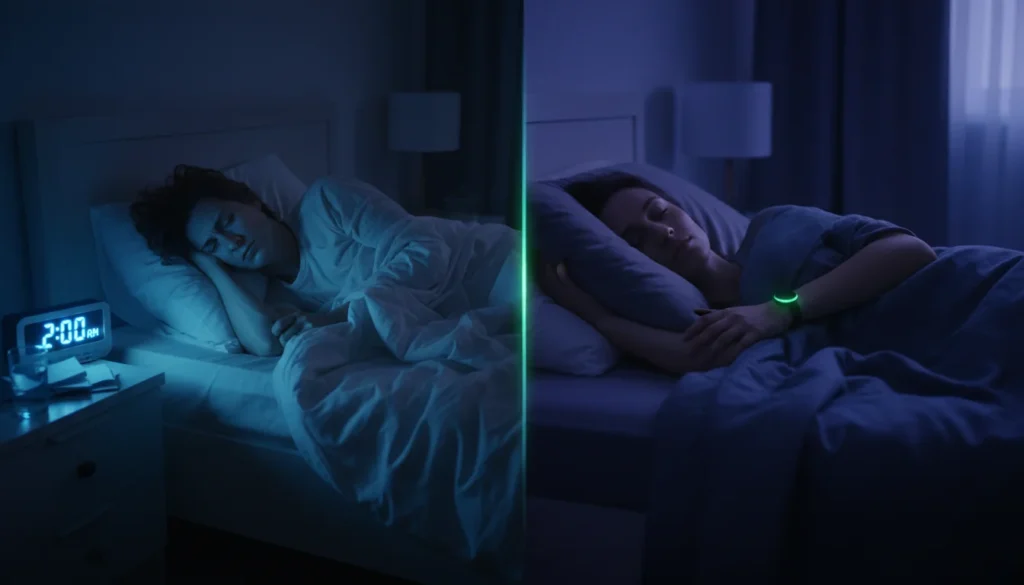
Step-by-Step: How to Implement the 10-3-2-1-0 Rule Tonight
Implementing the 10 3 2 1 0 bedtime routine requires planning. Here is a step-by-step guide assuming a 10:30 PM bedtime:
- 12:30 PM (10 hours prior): Finish your last cup of coffee, green tea, or caffeinated pre-workout. Switch entirely to water, herbal tea, or decaf beverages for the rest of the day.
- 7:30 PM (3 hours prior): Finish eating your dinner. Avoid any late-night snacking, heavy desserts, and pour out any remaining alcohol.
- 8:30 PM (2 hours prior): Close your laptop, silence work notifications on your phone, and mentally clock out. Engage in relaxing conversations, read a book, or do light stretching.
- 9:30 PM (1 hour prior): Turn off the TV, put your smartphone on a charger across the room, and dim the overhead lights. Use this final hour for personal hygiene, meditation, or reading under a warm-toned lamp.
- Next Morning (0 snoozes): When your alarm goes off, physically get out of bed immediately. Expose yourself to natural sunlight as soon as possible to halt melatonin production and signal to your brain that a new day has begun.
Step-by-Step: How to Implement the 3-2-1 Sleep Rule (Easier Version)
If you prefer the simpler 3-2-1 bedtime routine explained, here is how to apply it, again assuming a 10:30 PM bedtime:
- 7:30 PM (3 hours prior): Complete your final meal of the day. Stop alcohol consumption to allow your liver to process it before sleep.
- 8:30 PM (2 hours prior): Stop checking work emails, reviewing finances, or engaging in intense, stress-inducing discussions.
- 9:30 PM (1 hour prior): Implement the no screens 1 hour before bed rule. Put away the phone, tablet, and TV. Transition to analog wind-down activities.
Common Mistakes People Make with These Sleep Rules (and How to Fix Them)
Even with the best intentions, people often sabotage these sleep rules comparison 10-3-2-1-0 routines through technicalities. A common mistake during the ‘2 hours of no work’ phase is substituting professional work with high-stress personal activities, such as playing highly competitive video games or reading anxiety-inducing news. While not technically ‘work,’ these activities still spike cortisol and adrenaline. The fix is to ensure the 2-hour window is dedicated to genuinely parasympathetic activities.
Another frequent error is hidden caffeine. People will successfully stop drinking coffee 10 hours before bed but will consume dark chocolate, certain pain relievers, or kombucha later in the afternoon, unknowingly ingesting caffeine. Always read labels. Finally, regarding the ‘no screens’ rule, some individuals substitute a smartphone screen with an e-reader device cranked to maximum brightness. To fix this, ensure any digital reading device is set to a warm amber light mode and reduced brightness, or better yet, use a physical paper book.
Real-Life Sample Evening Schedules Using 10-3-2-1-0 and 3-2-1
To visualize how these popular sleep routines TikTok has popularized actually fit into a normal evening, consider this comparative schedule for someone aiming to sleep at 11:00 PM.
| Time of Day | 10-3-2-1-0 Rule Action | 3-2-1 Rule Action |
|---|---|---|
| 1:00 PM | Final caffeine intake finishes. | No specific action required. |
| 8:00 PM | Dinner ends; no more alcohol/food. | Dinner ends; no more alcohol/food. |
| 9:00 PM | Work devices shut down; relaxation begins. | Work devices shut down; relaxation begins. |
| 10:00 PM | All screens off; read paper book; hygiene routine. | All screens off; read paper book; hygiene routine. |
| 11:00 PM | Lights out; sleep time. | Lights out; sleep time. |
| 7:00 AM (Next Day) | Wake up instantly; zero snoozes. | Wake up (snoozing not formally restricted, but ideally avoided). |
Tracking Progress: How to Measure If These Rules Are Actually Improving Your Sleep
Adopting a new routine requires consistency, but how do you know if it is actually working? While subjective feelings of restfulness are important, modern technology offers objective data. Using smart rings or advanced biometric wearables can help you monitor your sleep architecture. If you are curious about the precision of these devices, you might ask, Are Sleep Trackers Accurate for Deep Sleep? Understanding the metrics is crucial, and learning How Do Sleep Trackers Measure Deep Sleep? can empower you to interpret your nightly data correctly.
By tracking your baseline sleep before implementing the 10-3-2-1-0 or 3-2-1 rule, you can visibly see the increase in REM and deep sleep stages after a few weeks. For actionable advice on tweaking your routine based on these metrics, explore How to Improve Deep Sleep Using Sleep Tracker Data and discover How to Use Biometric Technology to Improve Your Sleep to fully optimize your 2026 sleep hygiene protocol.
When These Rules Are Not Enough – When to See a Doctor or Sleep Specialist
While the 10-3-2-1-0 rule for better sleep is powerful, it is not a substitute for medical treatment. If you have rigorously applied these boundaries for a month and still suffer from severe daytime fatigue, loud snoring, gasping for air at night, or an inability to stay asleep, you may be dealing with a clinical sleep disorder. Conditions like Obstructive Sleep Apnea (OSA), restless legs syndrome, or chronic clinical insomnia cannot be cured simply by putting your phone away an hour early. In these cases, it is imperative to consult a board-certified sleep medicine physician who may recommend a polysomnography (sleep study) or Cognitive Behavioral Therapy for Insomnia (CBT-I).
Bonus: How These Rules Compare to the 3-3-3 Rule and Other Popular Sleep Methods
As the landscape of sleep optimization expands, other numerical rules have also emerged. You may have heard of the 3-3-3 rule, which serves a different purpose within wellness circles. To understand how that specific framework operates compared to the evening countdowns discussed here, you can read more about What Is the 3-3-3 Rule for Sleep? While the 3-3-3 rule focuses on different aspects of habit formation and daytime structuring, the 10-3-2-1-0 and 3-2-1 rules remain the gold standards for dedicated, chronological evening wind-downs. Choose the routine that aligns with your specific friction points, stick to it consistently, and watch your sleep quality transform.
Expert Insight & Medical Review
This comprehensive guide on sleep hygiene rules has been compiled utilizing the latest consensus in chronobiology, cognitive behavioral therapy for insomnia (CBT-I) principles, and neuroendocrinology standard practices recognized by leading sleep foundations as of early 2026.
2026 Educational Disclaimer
Disclaimer: This content is for informational and educational purposes only, reflecting the clinical landscape of early 2026. It is not a substitute for professional medical advice, diagnosis, or treatment. Always seek the advice of your physician or other qualified health provider with any questions you may have regarding a medical condition or sleep disorder.
References & Sources
- National Heart, Lung, and Blood Institute (NIH). ‘Sleep Deprivation and Deficiency.’ Available at: https://www.nhlbi.nih.gov/health/sleep-deprivation
- Centers for Disease Control and Prevention (CDC). ‘Sleep Hygiene Tips.’ Available at: https://www.cdc.gov/sleep/about_sleep/sleep_hygiene.html
- Sleep Foundation. ‘How Blue Light Affects Sleep.’ Available at: https://www.sleepfoundation.org/bedroom-environment/blue-light