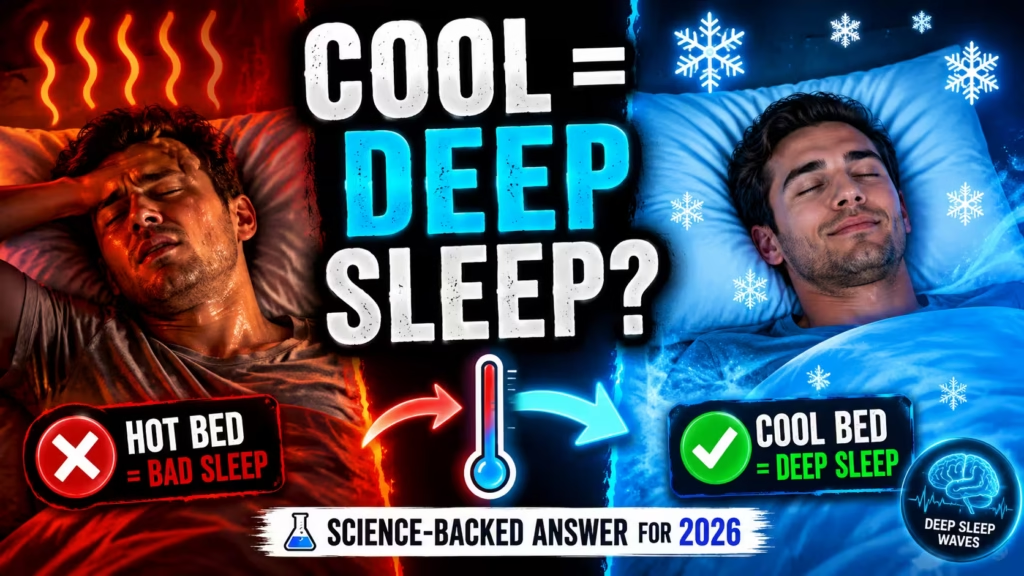
Short Answer: Yes — cooling your bed is one of the most scientifically validated ways to increase deep (slow-wave) sleep. Your core body temperature must drop 1–1.5°C to enter restorative deep sleep. A cooler sleep surface accelerates that drop, keeping you in deep sleep longer and improving HRV recovery overnight.
What Is Deep Sleep and Why Does It Matter?
Deep sleep — technically called slow-wave sleep (SWS) or N3 sleep — is the most physically restorative stage of the sleep cycle. During deep sleep, your body:
- Repairs muscle tissue and releases growth hormone
- Consolidates long-term memories and clears metabolic waste from the brain
- Rebuilds immune function and reduces systemic inflammation
- Resets heart rate variability (HRV) for the next day
Most adults spend only 15–20% of total sleep time in deep sleep, with the majority occurring in the first half of the night. If you are waking up tired, struggling with slow recovery from exercise, or showing low HRV on your Oura Ring or WHOOP — insufficient deep sleep is frequently the cause.
The critical question: What is the #1 environmental factor that determines whether you enter and stay in deep sleep?
The answer, backed by decades of sleep science, is temperature.
The Science of Body Temperature and Sleep
Your body follows a precise circadian thermoregulatory rhythm. About two hours before your natural sleep time, your core body temperature begins falling. This is not a side effect of sleep — it is a trigger for sleep itself.
This process, known as thermoregulatory sleep propensity, works like this:
- Your blood vessels near the skin (especially hands and feet) dilate
- Heat is released from the skin surface outward
- Core body temperature drops approximately 1–1.5°C
- The brain interprets this drop as a signal to initiate sleep
- As deep sleep deepens, core temperature continues declining, reaching its minimum about 2–3 hours before you wake
The critical insight: anything that interferes with this temperature drop disrupts deep sleep architecture.
A warm bed traps body heat, slows the natural cooling process, and makes your body work harder to thermoregulate — pulling energy away from deep restoration. A cool sleep surface does the opposite: it accelerates heat dissipation from your skin, allowing your core temperature to drop faster and deeper, supporting extended time in slow-wave sleep.
As Van Someren’s landmark review in Chronobiology International documented, the relationship is bidirectional — not only does falling body temperature promote sleep, but sleep itself actively continues regulating body temperature. Interrupt either side of this equation and you fragment the entire cycle.
Does Cooling Your Bed Actually Work? What the Research Shows
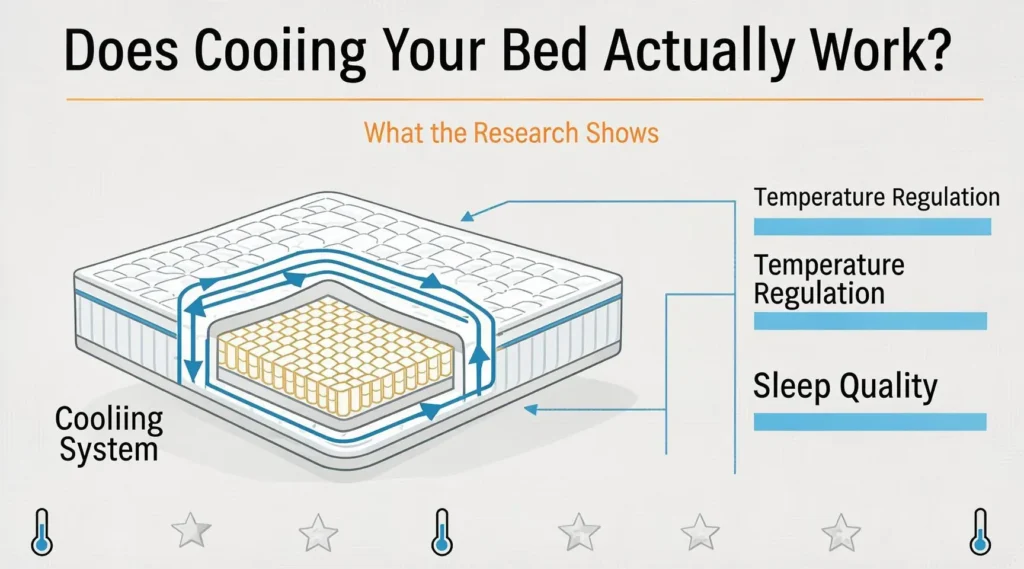
This is not biohacking theory. The evidence base is substantial and growing rapidly.
Harvard Medical School Study (2025)
A peer-reviewed pilot study from the Division of Sleep and Circadian Disorders at Mass General Brigham (Harvard Medical School), published in Frontiers in Sleep in September 2025, tracked 64 participants over 2,627 total days of data. Participants who used cooling bed sheets reported:
- 69% reported improved sleep quality
- Sleep duration increased by 26 minutes per night
- Trouble sleeping from feeling too hot dropped from 82.5% to 39.7%
- Mean improvement on the Pittsburgh Sleep Quality Index: 1.9 points
Sleep Number Smart Bed Temperature Study (2025)
Sleep Number presented findings from three temperature-focused studies at SLEEP 2025, using data from over 9,100 sleep sessions. The EEG-based delta-beta ratio analysis found that personalized bed temperature programs helped people fall asleep faster and reach deeper sleep more quickly — with the most significant benefits observed in women experiencing menopause-related symptoms.
Preprints.org Systematic Review on Cooling Interventions (December 2025)
A systematic review published in December 2025 synthesized clinical trial data on cooling interventions and concluded that cool temperatures are associated with:
- Higher delta wave activity (the hallmark of the deepest sleep stage)
- Shorter sleep onset latency (time to fall asleep)
- Longer slow-wave sleep (SWS) duration for restorative rest
- Even subtle skin temperature reduction of just 0.4°C significantly increased SWS and reduced nocturnal awakenings
Large-Scale Population Data
Research analyzing over 3.75 million nights of sleep found that for every 1°F increase in bedroom temperature above the optimal range, sleep efficiency decreased measurably. The data consistently points to the same optimal zone: a cool sleep surface between 55°F and 68°F (13°C to 20°C), depending on the individual.
The Ideal Bed and Room Temperature for Deep Sleep
Most sleep researchers agree on the following ranges:
| Parameter | Optimal Range | Why It Matters |
|---|---|---|
| Room temperature | 60–67°F (15.5–19.4°C) | Supports full-body thermoregulation |
| Bed surface temperature | 55–68°F (12.8–20°C) | Directly contacts skin for faster cooling |
| Bedroom humidity | 40–50% | Prevents disruption to sweat evaporation |
| Head/pillow area | Slightly cooler than body | Cooling the prefrontal cortex increases SWS |
The Cleveland Clinic and sleep researchers consistently agree that most adults sleep best between 60–67°F. Temperatures above 70°F are associated with insomnia-promoting conditions. At these warmer temperatures, your body cannot complete its natural core temperature drop, and you spend more time in lighter N1 and N2 sleep stages instead of restorative N3.
The reason active bed cooling (like ChiliPad or Eight Sleep) outperforms simply adjusting your thermostat is surface contact: a cooling mattress pad directly conducts heat away from your skin at the source, while room air takes much longer to achieve the same effect — especially if you share a bed or use heavy bedding.
How Bed Cooling Affects HRV and Biometric Recovery
For those tracking biometrics, the connection between bed temperature and HRV is particularly significant.
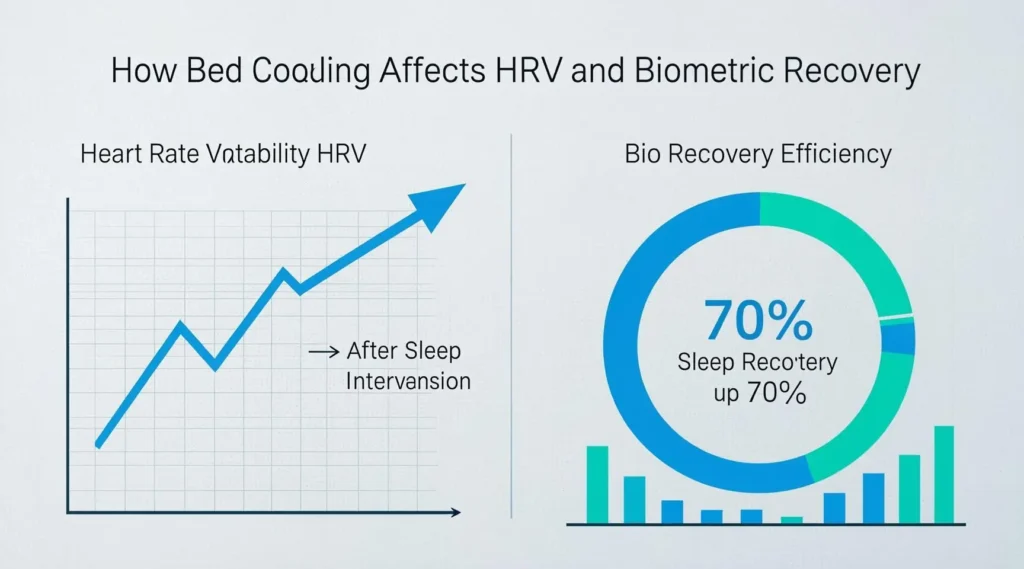
HRV (Heart Rate Variability) is the most sensitive measure of autonomic nervous system recovery available to consumers. Higher HRV generally means your body has recovered well overnight. Deep sleep is the primary driver of HRV restoration — and because cooling the bed increases deep sleep time, it directly improves HRV scores.
Eight Sleep’s clinical research data (Autopilot 2.0 study) found that their AI-driven temperature automation:
- Increased deep sleep by 10% on average
- Improved HRV by 6%
- Improved resting heart rate by 1%
Their more recent member outcome data reports even stronger results: up to 34% more deep sleep, up to 44% faster sleep onset, and HRV improvement of up to 17% — though these are aggregate member reports rather than controlled clinical figures.
If you are monitoring your Oura Ring readiness score or WHOOP recovery score and finding it consistently low despite adequate sleep hours, bed surface temperature is the first environmental variable to audit. Many users see measurable HRV improvement within 7–14 days of implementing a cooling protocol.
Best Bed Cooling Methods: Ranked by Effectiveness
Not all cooling methods are equal. Here is how the main options stack up based on both clinical evidence and biometric data:
1. Active Hydro-Cooling Mattress Systems (Highest Effectiveness)
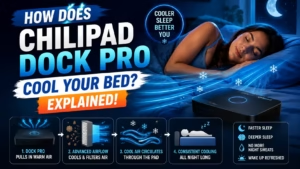
Products like the ChiliPad Dock Pro and Eight Sleep Pod circulate chilled water through a mattress pad at the surface level. This is the most direct and powerful method of cooling the sleep surface. Both can cool down to 55°F — well within the optimal deep sleep zone.
Effectiveness rating: ⭐⭐⭐⭐⭐
2. Phase-Change Material (PCM) Mattress Toppers (High Effectiveness)
PCM materials absorb excess body heat during sleep and release it gradually, buffering temperature spikes. Clinical studies comparing PCM mattresses to conventional designs show improved sleep continuity. Less precise than active cooling but more affordable.
Effectiveness rating: ⭐⭐⭐⭐
3. Cooling Bed Sheets (Moderate-High Effectiveness)
The Harvard/MGH study showed 69% of participants reported improved sleep quality with cooling sheets. Most effective for people who sleep “hot” but do not have severe thermoregulation issues. Effective as a baseline layer even when combined with active cooling systems.
Effectiveness rating: ⭐⭐⭐
4. Cooling Pillow (Moderate Effectiveness)
Sleep researchers note that cooling the head — specifically the prefrontal cortex — increases slow-wave sleep quality. Cooling pillows are an affordable entry point and pair well with other methods.
Effectiveness rating: ⭐⭐⭐
5. Room Air Conditioning Only (Lower Effectiveness)
Setting your thermostat to 65°F helps, but room air takes time to penetrate bedding, and shared bedding creates warm zones. Effective as baseline but outperformed by any surface-contact cooling method.
Effectiveness rating: ⭐⭐
ChiliPad Dock Pro vs. Eight Sleep: Which Improves Deep Sleep More?
Both use water-circulated cooling and are the most effective bed cooling systems available in 2026. The right choice depends on your goals:
| Feature | ChiliPad Dock Pro | Eight Sleep Pod 5 |
|---|---|---|
| Cooling range | 55–115°F | 55–110°F |
| HRV tracking | No (pairs with Oura/WHOOP) | Yes (embedded sensors) |
| AI temperature automation | No | Yes (Autopilot) |
| Subscription required | No | Yes ($19/month) |
| Deep sleep data | Via paired wearable | Integrated in app |
| Privacy (offline mode) | Yes (airplane mode) | No (always connected) |
| Price | ~$699 | ~$2,299+ |
Our recommendation: If you already track sleep with an Oura Ring or WHOOP and want maximum cooling power with no subscription, the ChiliPad Dock Pro is the better value. If you want a single unified device that both cools and tracks biometrics — and are willing to pay the premium — Eight Sleep Pod 5 delivers the most complete picture.
For pure deep sleep improvement, both systems perform at a similar level when used at equivalent temperatures.
Who Benefits Most from Bed Cooling?
Bed cooling delivers the greatest biometric improvement for:
Hot sleepers and night sweat sufferers — The most immediate benefit. If you regularly wake up damp or overheated, cooling your bed surface can resolve this entirely and add 20–30+ minutes of continuous sleep per night.
Women in perimenopause or menopause — The SLEEP 2025 research specifically highlighted significant deep sleep improvements in this group, where thermoregulation disruption is a primary symptom.
Athletes and high-recovery demands — If you train intensely, deep sleep is when tissue repair and HRV reset happens. Even a 10% increase in deep sleep has measurable next-day performance implications.
People with low Oura Ring readiness or WHOOP recovery scores — If your biometrics consistently show low recovery despite 7–8 hours in bed, temperature regulation is the most commonly overlooked variable.
Couples with different temperature preferences — Dual-zone systems (ChiliPad and Eight Sleep) allow each partner to set independent temperatures, eliminating one of the most common sources of sleep conflict.
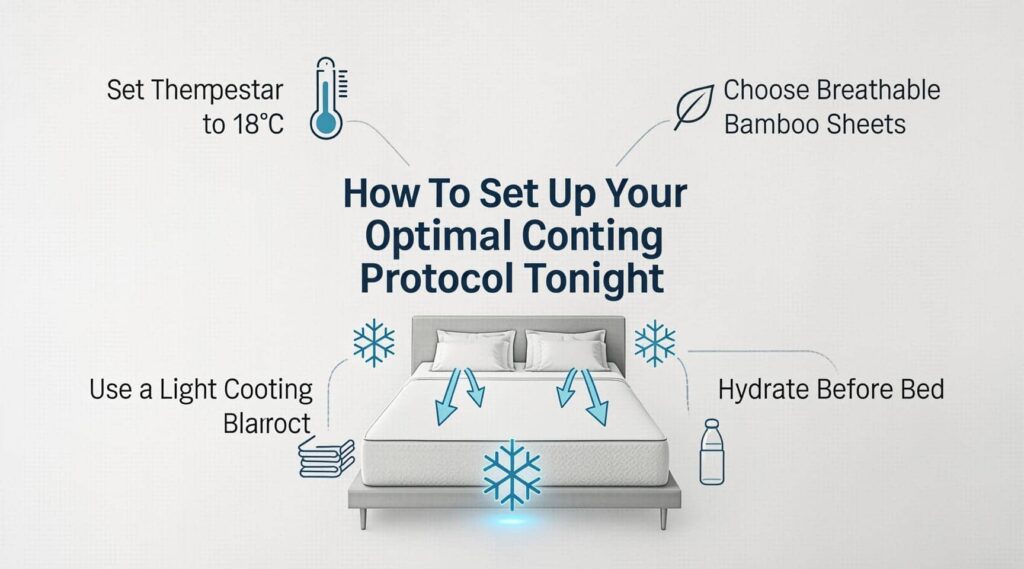
How to Set Up Your Optimal Cooling Protocol Tonight
You do not need an expensive cooling system to start improving your deep sleep temperature profile tonight. Here is the Biometric Sleep protocol, tiered by investment level:
Level 1: Free (Start Tonight)
- Set your thermostat to 65°F (18°C) before bed
- Remove one layer of bedding — most people sleep with too much
- Take a warm shower 60–90 minutes before bed — this counterintuitively accelerates the core temperature drop afterward
- Keep your feet uncovered if you tend to sleep hot
Level 2: Low Investment ($30–$150)
- Add a cooling pillow with phase-change material
- Switch to moisture-wicking, breathable sheets (bamboo or Tencel)
- Use a clip-on fan to circulate air at bed level
- Wear minimal, breathable sleepwear or none
Level 3: Biohacker Protocol ($700+)
- Install a ChiliPad Dock Pro (set to 62–65°F for the first half of the night, slightly warmer for the second half to support REM)
- Pair with Oura Ring Gen 4 to track HRV, deep sleep %, and readiness score changes
- Monitor results over 14–30 nights before adjusting temperature settings
- Log your Oura sleep stage data weekly to optimize your exact temperature set point
Optimal Temperature Scheduling
The most advanced approach — used in Eight Sleep’s Autopilot and achievable manually with ChiliPad — is dynamic temperature scheduling:
- Hour 1–3 (deep sleep dominance): Set to 62–65°F — maximize SWS
- Hour 4–6 (REM dominance): Raise slightly to 67–68°F — REM is temperature-sensitive
- 30 min before wake time: Allow temperature to rise naturally — mirrors the body’s circadian warming signal
Frequently Asked Questions
Does cooling your bed improve deep sleep for everyone? Research shows most adults benefit from a cooler sleep surface, but optimal temperature is individual. The clinical range of 60–67°F for room temperature applies broadly, but some people run colder and may need a narrower band. Start with 65°F and adjust based on your biometric data.
How much does bed temperature affect deep sleep percentage? The evidence is significant. Eight Sleep’s clinical study using Autopilot temperature automation found a 10% average increase in deep sleep. Population-level data shows temperature is the #1 environmental factor in sleep efficiency — above light, noise, and mattress firmness.
What temperature should I set my ChiliPad for deep sleep? Most users find 62–65°F (16.7–18.3°C) on the cooling pad surface delivers the best deep sleep results when room temperature is already at 68–70°F. If your room is already at 65°F, you may need less active cooling. Pair with an Oura Ring to find your personal optimal set point over 2–3 weeks.
Can cooling your bed improve HRV? Yes. Eight Sleep’s peer-reviewed clinical data found a 6% improvement in HRV using their AI-managed temperature system. The mechanism is direct: more deep sleep = more HRV recovery overnight. This has been corroborated by individual biohacker data across platforms.
Is it bad to make your bed too cold? Yes. Temperatures below 60°F (15.5°C) can disrupt REM sleep and increase metabolic rate as your body works to generate heat. The goal is the optimal zone — cool enough to support deep sleep without crossing into cold-stress territory.
Does cooling the bed help with night sweats? Definitively yes. The Harvard/MGH cooling sheets study found that trouble sleeping due to feeling too hot dropped from 82.5% to 39.7% with a cooling intervention. Active hydro-cooling systems like ChiliPad are the most effective solution for severe night sweats.
How long does it take to see results from bed cooling? Most users report subjective improvement within 3–7 nights. Biometric data (HRV, Oura deep sleep %, sleep score) typically shows measurable change within 7–14 days. Full optimization — finding your precise temperature set point — usually takes 30 days of tracked data.
Do I need a bed cooling system if I already have AC? Air conditioning helps but is less effective than surface-contact cooling because your bedding creates a warm microclimate around your body regardless of room temperature. A bed cooling pad delivers cold directly at the skin contact point, which is where thermoregulation happens fastest.
The Bottom Line
The answer to “does cooling your bed improve deep sleep?” is an unambiguous yes — and it is one of the most evidence-backed interventions in sleep biohacking available in 2026.
Your body requires a core temperature drop of 1–1.5°C to enter slow-wave sleep. A cooling bed surface is the fastest, most direct way to facilitate that drop and keep you in deep sleep longer. The research — from Harvard, SLEEP 2025, and multiple randomized controlled trials — consistently shows improvements in sleep onset, deep sleep duration, sleep quality scores, and HRV recovery.
The biometric data tells the same story: users who track with Oura Ring or WHOOP and add a bed cooling system to their stack see measurable improvement in readiness scores within 2 weeks.
Start with room temperature tonight. Upgrade to active cooling when you are ready to optimize.