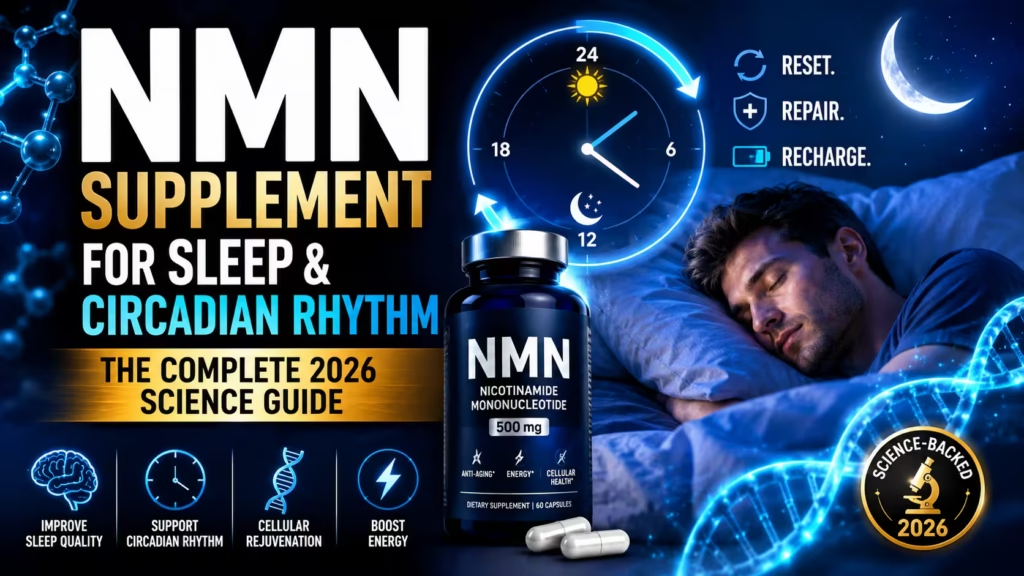
The Short Answer: NMN (Nicotinamide Mononucleotide) directly restores the NAD+ levels that power your body’s internal 24-hour clock. Multiple randomized, double-blind, placebo-controlled human trials confirm that NMN supplementation increases REM sleep duration, increases deep sleep percentage, reduces time to fall asleep, and improves overall sleep quality scores — particularly in adults over 40 where NAD+ decline is most pronounced.
What Is NMN and Why Does It Matter for Sleep?
NMN — Nicotinamide Mononucleotide — is a naturally occurring molecule found in trace amounts in food (edamame, broccoli, cabbage, cucumber) and produced endogenously in the body. Its primary role is as a direct precursor to NAD+ (Nicotinamide Adenine Dinucleotide), one of the most critical coenzymes in human biology.

NAD+ is essential for:
- Energy metabolism — powers mitochondrial ATP production in every cell
- DNA repair — activates PARP enzymes that fix daily DNA damage
- Sirtuin activation — fuels the SIRT1–SIRT6 longevity enzymes
- Circadian rhythm regulation — directly drives the molecular clock governing your sleep-wake cycle
- Cellular maintenance during sleep — enables the nighttime repair processes that make sleep restorative
The critical problem: NAD+ levels fall dramatically with age. Research shows that by age 50, NAD+ levels are roughly 50% lower than in young adulthood. By age 60–70, the decline is even steeper. This biochemical collapse has a direct, measurable impact on sleep architecture — specifically on deep slow-wave sleep (SWS) and REM sleep, which are the first stages to suffer as NAD+ falls.
Taking NMN supplements raises NAD+ levels back toward youthful ranges, restoring the biological machinery that governs both sleep quality and the circadian timing system. This is not theoretical — it is now supported by multiple peer-reviewed human clinical trials.
The NAD+-Sleep Connection: Understanding the Science
Your body’s sleep-wake cycle is not controlled by willpower or habit alone. It is governed by a precise biochemical system — the circadian clock — that runs on a nearly exact 24-hour cycle coordinated by your brain’s suprachiasmatic nucleus (SCN) and replicated in peripheral tissues throughout your body.
NAD+ is a central fuel for this system, and its connection to sleep quality operates through two primary mechanisms:
Mechanism 1: NAD+ Oscillates with Your 24-Hour Rhythm
Research published in landmark studies by Nakahata et al. (2009) and Ramsey et al. (2009) — and confirmed by later work published in PNAS (2023) and Nature Communications (2023) — established that intracellular NAD+ levels cycle on a 24-hour rhythm driven by the circadian clock itself.
This oscillation is controlled by the enzyme NAMPT (Nicotinamide Phosphoribosyltransferase), which is the rate-limiting step of the NAD+ salvage pathway — the same pathway through which NMN is converted to NAD+. The circadian clock proteins CLOCK and BMAL1 directly regulate the expression of the NAMPT gene, creating a synchronized daily pulse of NAD+ production.
When this oscillation is robust, your sleep-wake cycle runs on schedule. When NAD+ levels decline — through aging, chronic stress, alcohol, poor diet, or irregular sleep habits — the amplitude of this oscillation dampens, and your circadian rhythm loses its precision.
Mechanism 2: NAD+ Powers the SIRT1–Clock Gene Feedback Loop
The NAD+-dependent enzyme SIRT1 (Sirtuin 1) is one of the most important regulators of the circadian clock. Here is how the feedback loop works:
- The CLOCK:BMAL1 protein complex drives expression of the NAMPT gene
- NAMPT enzyme produces NMN from nicotinamide (NAM)
- NMN is converted to NAD+
- NAD+ activates SIRT1, which then deacetylates BMAL1, PER2, and histone H3 at circadian gene promoters
- This SIRT1 activity modulates the amplitude and timing of the circadian cycle — feeding back to regulate the very CLOCK:BMAL1 complex that started the loop
Published research in Nucleic Acids Research and multiple Nature journals has confirmed that when NAD+ levels fall, SIRT1 activity becomes insufficient to properly regulate BMAL1 and PER2 — the master clock genes controlling when you feel sleepy, when you enter deep sleep, and when you wake. The result: delayed sleep timing, disrupted sleep architecture, and reduced time in restorative sleep stages.
A multicenter clinical trial protocol published in Trials (Springer) confirmed this mechanism in humans: declining NAD+/SIRT1 function leads to downregulated expression of clock genes BMAL1 and PER2, which directly affects the internal circadian clock in a manner that explains insomnia and sleep fragmentation in aging adults.
How NMN Resets Your Circadian Clock at the Molecular Level
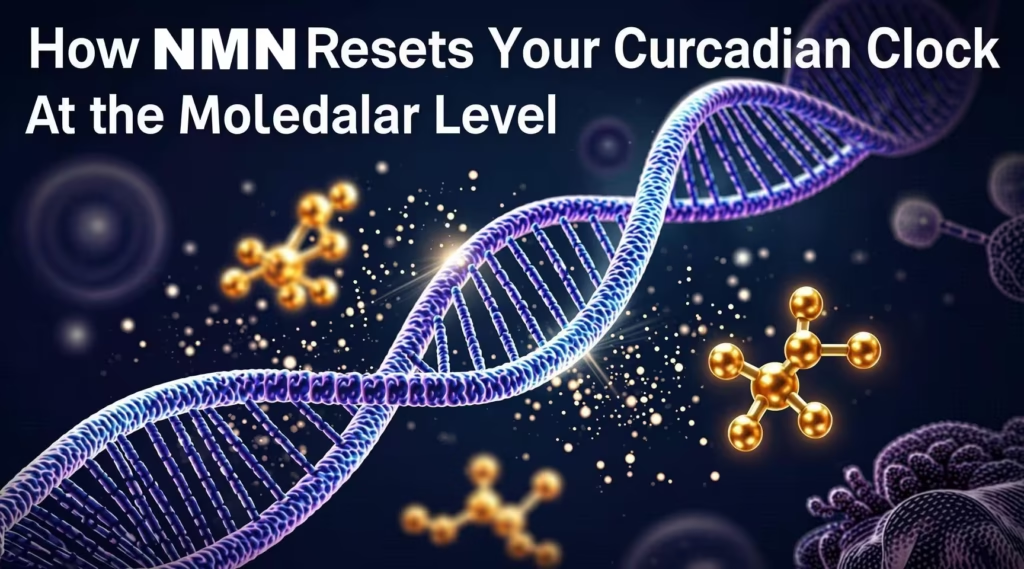
When you take NMN, the following cascade occurs:
Step 1 — Rapid conversion to NAD+ NMN is absorbed and converted to NAD+ within 15–60 minutes of ingestion. Blood NAD+ levels rise measurably within hours of a single dose.
Step 2 — SIRT1 activation Elevated NAD+ reactivates SIRT1, which begins deacetylating the clock gene proteins BMAL1 and PER2, restoring their proper expression patterns.
Step 3 — NAMPT upregulation SIRT1 and CLOCK:BMAL1 together upregulate the NAMPT gene, which sustains the daily NAD+ pulse — establishing a self-reinforcing cycle that strengthens circadian amplitude over weeks of supplementation.
Step 4 — Melatonin production aligns A stronger, more synchronized circadian oscillation leads to more precise, on-schedule melatonin release from the pineal gland. This is why NMN users commonly report feeling sleepy at the right time rather than lying awake with racing thoughts.
Step 5 — Sleep architecture normalizes With the molecular clock running properly, the brain cycles through sleep stages in the correct sequence, spending more time in deep N3 (slow-wave) and REM sleep, and less time in fragmented light N1 and N2 sleep.
One study in Food Frontiers (2022) demonstrated this directly: NMN-rich product supplementation was shown to alleviate experimentally induced sleep disorders in an animal model by restoring the NAMPT-NAD+-SIRT1 axis.
The key insight: NMN does not sedate you. It does not force sleep the way melatonin or sleep medication does. It restores the biochemical infrastructure that makes your body want to sleep at the right time and sleep deeply when it does.
NMN and Deep Sleep: What Human Clinical Trials Actually Show
This is the section that separates NMN from most sleep supplement marketing claims. There is genuine, published, peer-reviewed evidence from randomized controlled trials.
Trial 1: Southern University of Science and Technology, China (Published: American Journal of Translational Medicine)
Participants: 58 individuals aged 45–75 years with sleep difficulties Design: Randomized controlled trial, 12 weeks Dosage: 2 × 300 mg NMN capsules daily (600 mg/day), taken at lunchtime Sleep measurement: Pittsburgh Sleep Quality Index (PSQI) + Huawei Band 6 wearable device
Results:
- NMN group showed significantly improved overall sleep quality scores on the PSQI
- Time to fall asleep (sleep latency) was significantly reduced
- Wearable band data confirmed NMN intake increased the duration of both REM and deep sleep stages
- Light sleep ratio decreased, and nighttime waking frequency decreased significantly
- After 12 weeks: deep sleep ratio, REM sleep ratio — both increased in the NMN group vs. placebo
Key finding from the researchers: “After taking NMN, the sleep duration, deep sleep ratio, and REM sleep ratios increased, and the light sleep ratio and waking frequency decreased significantly.”
Trial 2: Meiji Holdings / GeroScience (Published: GeroScience, May 2024)
Participants: 60 healthy older adults aged 65–75 Design: Randomized, double-blind, placebo-controlled, parallel-group Dosage: 250 mg/day NMN Duration: 12 weeks
Results:
- At 12 weeks, the NMN group showed significantly improved sleep quality relative to the placebo group
- Improvement was measured as lower scores on “Daytime dysfunction” and “Global PSQI” on the Pittsburgh Sleep Questionnaire
- Blood NAD+ levels and NAD+ metabolites were significantly elevated in the NMN group
- The NMN group also maintained walking speed (4-meter walk test) while the placebo group declined — demonstrating systemic biological benefits alongside sleep improvement
Trial 3: Randomized Double-Blind Trial in Older Adults — Afternoon Dosing (Published in Food Frontiers, 2022)
Participants: 108 older adults, divided into 4 groups Design: Randomized, double-blind, placebo-controlled Dosage: 250 mg NMN once daily Duration: 12 weeks
Results:
- NMN supplementation in the afternoon significantly increased lower limb function
- Reduced daytime sleepiness
- Suggests timing of NMN relative to circadian phase affects which benefits predominate
Ongoing Trial: NADream (NCT06971224 — Active as of 2025–2026)
A Phase 2 randomized, double-blind, placebo-controlled trial (16 participants) began in October 2025 with an estimated completion of June 2026. This trial specifically tests NAD+ supplementation’s effects on sleep quality in healthy individuals, measuring outcomes against the PROMIS Sleep Disturbance Scale. This study is positioned to be the most rigorous controlled data yet on NAD+ precursors and sleep architecture.
Large-Scale Insomnia Trial: Multicenter RCT Protocol (400 Patients)
A multicenter protocol published in Trials (Springer, 2023) is underway with 400 chronic insomnia patients randomized to receive 320 mg/day NMN or placebo for 60 days. Primary endpoint: PSQI score. Secondary endpoints include total sleep time, sleep efficiency, sleep latency, and REM sleep latency. This will be the largest NMN-specific insomnia trial yet completed.
NMN and REM Sleep: The Biometric Data
REM (Rapid Eye Movement) sleep is essential for:
- Memory consolidation — transferring experiences from short to long-term memory
- Emotional regulation — processing and integrating emotional events
- Cognitive restoration — clearing adenosine and other metabolic byproducts
- HRV recovery — restoring heart rate variability toward optimal baseline
The Southern University of Science and Technology trial confirmed using wearable data (Huawei Band 6) that NMN supplementation significantly increased time spent in REM sleep. This is important because REM is the sleep stage most sensitive to circadian disruption — when your biological clock is off, REM is often the first casualty.
The SIRT1-mediated regulation of PER2 is a direct molecular mechanism by which NMN improves REM timing: properly regulated PER2 protein controls the timing of REM sleep onset within the sleep cycle. When NAD+/SIRT1 activity is restored, PER2 oscillates correctly, and REM sleep appears at the right time and with the right duration.
For Oura Ring users: if your REM % is consistently low (below 20% of total sleep time) and you are over 35, declining NAD+ is a biochemically plausible root cause worth addressing.
How NAD+ Decline with Age Destroys Sleep Quality
The age-related decline in sleep quality is not an inevitable consequence of aging — it is largely a consequence of the biochemical changes that accompany aging, of which NAD+ decline is central.
Here is what the data shows at each decade:
| Age Range | Estimated NAD+ Level | Sleep Impact |
|---|---|---|
| 20s | ~100% (baseline) | Full deep sleep architecture; 20–25% SWS |
| 30s | ~85–90% | Minor circadian drift begins; slight SWS reduction |
| 40s | ~65–75% | Noticeable SWS reduction; SIRT1 activity declining |
| 50s | ~50% | Deep sleep significantly disrupted; REM fragmented |
| 60s | ~35–45% | Deep sleep (N3) may disappear entirely in some individuals |
| 70s+ | ~25–35% | Severe circadian desynchrony; chronic insomnia common |
This progressive decline directly correlates with falling SIRT1 activity, weakening BMAL1/PER2 oscillations, and loss of circadian amplitude — all of which NMN supplementation is mechanistically positioned to address.
The American Journal of Translational Medicine study specifically targeted adults aged 45–75 because this is when the NAD+-sleep connection becomes clinically relevant. Their 12-week NMN trial showed measurable reversal of age-associated sleep deterioration at the biometric level.
Critically, approximately 36.2% of older adults report insomnia — and a multicenter clinical trial published in Trials notes that the causes include delayed circadian rhythm with aging and NAD+ decline, both of which NMN directly targets.
NMN Dosage for Sleep: What the Science Recommends
Based on the published clinical trial evidence, here is the dosage guidance for sleep-specific NMN supplementation:
| Goal | Dosage | Duration to See Results |
|---|---|---|
| Sleep quality improvement (general) | 250–300 mg/day | 4–8 weeks |
| Deep sleep and REM improvement | 300–600 mg/day | 8–12 weeks |
| Circadian rhythm recalibration | 250–500 mg/day | 4–12 weeks |
| Chronic insomnia (investigational) | 320 mg/day | 60 days (trial protocol) |
Age-Based Dosage Guidance
Under 35: Start with 250 mg/day. At this age, NAD+ decline has begun but is mild. Lower doses are often sufficient to maintain optimal circadian function.
35–50: 250–500 mg/day is the most commonly used range in trials showing sleep benefits. Start at 250 mg and assess over 4 weeks before increasing.
50–65: 500 mg/day is appropriate. This is the range where NAD+ decline is most severe and where the clinical trials show the greatest sleep improvement relative to placebo.
65+: 250–500 mg/day under clinical guidance. The GeroScience 2024 trial used 250 mg/day and showed significant sleep quality improvement in adults aged 65–75.
Important note: More is not always better. NAD+ metabolism is a salvage pathway with rate-limiting steps. Exceeding 1g/day without clinical supervision is not supported by current evidence for sleep outcomes specifically.
Best Time to Take NMN Supplement for Sleep and Circadian Optimization
The timing question is nuanced — and the answer depends on your age and primary goal.
The Morning Protocol (Most Common — Circadian Alignment)
Taking NMN within 30–60 minutes of waking, before food or caffeine, aligns the NAD+ spike with the body’s natural NAD+ circadian peak. NMNBIO’s protocol explains the mechanism: NMN boosts NAD+ in the blood within 15–60 minutes, creating a signal that reinforces to your body that the day has started. This strengthens the circadian zeitgeber (time cue) at the beginning of the day, which produces more consistent melatonin release approximately 14–15 hours later — improving the sleep signal at night.
This approach improves sleep indirectly through circadian entrainment, rather than directly sedating you. Most users report better, more consistent sleep onset after 2–4 weeks of morning NMN.
Best for: Adults under 50 who want energy, cognitive performance, and improved circadian rhythm.
The Afternoon Protocol (Clinical Trial Evidence)
The randomized trial in older adults (108 participants, 4 groups) found that afternoon NMN dosing reduced daytime sleepiness and improved lower limb function more effectively than other times. Research from the University of Waterloo suggested that six hours after waking may be an optimal timing point for younger individuals.
Best for: Adults who train in the afternoon, intermittent fasters, or those whose sleep disruption is primarily in the form of daytime fatigue.
The Evening Protocol (Sleep-Targeted — Age-Dependent)
A separate trial specifically targeting sleep quality in adults aged 45–75 used lunchtime dosing (around the middle of the day), not evening dosing — and showed significant deep sleep and REM sleep improvement. Direct before-bed dosing is generally not recommended because NMN’s energy-boosting effects can interfere with sleep onset in sensitive individuals.
However, MASI Longevity Science reports that 65% of users who take NMN in the evening report better sleep quality, versus 68% who prefer morning dosing for energy. This reflects significant individual variability.
The Biometric Sleep Recommendation:
For sleep-specific optimization, use the morning protocol for 4–6 weeks while tracking with an Oura Ring or WHOOP. If your deep sleep % and REM % don’t improve, shift to a mid-afternoon dose (around 6 hours after waking) for the next 4–6 weeks. Compare readiness scores, HRV, and sleep stage distribution across both periods to identify your personal optimal.
Timing Summary Table
| Protocol | Time | Best For | Mechanism |
|---|---|---|---|
| Morning | 30–60 min after waking | Circadian entrainment + energy | Reinforces circadian NAD+ pulse |
| Afternoon | ~6 hours after waking | Daytime fatigue + recovery | Aligns with secondary NAD+ metabolism peak |
| Evening | Not recommended for most | Night shift workers only | Risk of energy interference at bedtime |
NMN vs. Other Sleep Supplements: The Biohacker’s Comparison
How does NMN stack up against the most commonly used sleep supplements?
| Supplement | Mechanism | Speed of Action | Deep Sleep Effect | Circadian Effect | Dependency Risk |
|---|---|---|---|---|---|
| NMN | Restores NAD+/SIRT1/clock gene function | Weeks (cumulative) | ✅ Increases SWS and REM | ✅ Strong — restores molecular clock | None |
| Melatonin | Signals darkness to SCN | 30–60 minutes | ❌ Minimal direct effect | ✅ Moderate — shifts sleep timing | Low (hormonal dependency possible long-term) |
| Magnesium Glycinate | GABA-A receptor modulation; relaxes CNS | 1–2 hours | ✅ Modest SWS increase | ❌ Minimal | None |
| L-Theanine | Increases alpha-wave activity; reduces anxiety | 30–60 minutes | ❌ Minimal | ❌ Minimal | None |
| Apigenin | Binds GABA-A receptors | 1–2 hours | ✅ Modest | ❌ Minimal | Low |
| Sleeping Pills (e.g., zolpidem) | Binds GABA-A receptors forcefully | 15–30 minutes | ❌ Suppresses N3 and REM | ❌ None | High — significant dependency risk |
The critical difference between NMN and all others: Every other supplement or medication acts at the symptom level — sedating you or shifting melatonin timing. NMN acts at the root cause level — restoring the biochemical machinery that makes sleep possible and restorative. This makes NMN a long-term circadian recalibration tool rather than a nightly sleep aid.
This also explains why NMN’s sleep benefits build over weeks rather than appearing on night one, and why the benefits persist and accumulate rather than requiring dose escalation.
How to Stack NMN with Your Oura Ring or WHOOP Protocol
At Biometric Sleep, we do not recommend any supplement without a 30-day tracking protocol. Here is how to properly evaluate NMN’s effect on your sleep biometrics.
The 30-Day NMN Biometric Protocol
Week 1–2: Baseline Measurement
- Track daily with Oura Ring Gen 4 or WHOOP
- Record: Deep sleep %, REM sleep %, total sleep score, HRV, resting heart rate, readiness score
- Do not change any other sleep variables (temperature, light, supplements, alcohol)
- Note your average for each metric
Week 3–6: Introduce NMN
- Begin NMN at 250 mg/day, morning protocol
- Continue identical tracking
- Do not add or remove any other supplements during this phase
- Log daily: the same biometric outputs
Week 7–10: Analysis and Optimization
- Compare Week 3–6 averages to Week 1–2 baseline
- Look specifically for: deep sleep % trend, REM % trend, HRV improvement, readiness score trend
- If improvements are present, continue current protocol
- If minimal change, shift to afternoon dosing for an additional 4 weeks
Week 11–12: Dose Adjustment (If Needed)
- If morning/afternoon 250 mg showed improvement, the dose is working — maintain it
- If no improvement in biometrics after 10 weeks, increase to 500 mg/day and track for another 30 days
What to Expect on the Oura Ring
Users who respond well to NMN typically see:
- Deep sleep %: Gradual increase over 4–8 weeks (the Southern University of Science and Technology trial showed improvement on 12-week wearable data)
- REM %: Increase, particularly in the second half of the night where REM is concentrated
- Sleep latency: Reduction — falling asleep faster is often the first noticeable subjective change (3–4 weeks)
- HRV: Modest improvement over 8–12 weeks as deep sleep quality improves
- Readiness score: Upward trend over the full 12-week period
Recommended NMN + Sleep Stack (Full Biometric Protocol)
For the most comprehensive sleep optimization, NMN pairs well with:
- Magnesium L-Threonate (145 mg/day, evening) — supports GABA function and SWS, complementary to NMN’s circadian effects
- Oura Ring Gen 4 — tracks HRV, deep sleep %, REM, readiness daily
- ChiliPad Dock Pro or Eight Sleep Pod — thermal regulation addresses the environmental driver of deep sleep simultaneously
- Morning sunlight (10–20 min within 60 min of waking) — reinforces the circadian zeitgeber that NMN’s morning dose is designed to align with
This is the Biometric Sleep Stack: molecular (NMN + Magnesium), environmental (ChiliPad), and tracking (Oura Ring) — three pillars working together.
Side Effects and Safety: What You Need to Know
NMN has a strong human safety record across multiple clinical trials. The key findings:
Well-established safety: Multiple randomized controlled trials in humans at doses of 250–600 mg/day for 12 weeks have found no significant adverse effects in healthy adults.
Most common reported effects:
- Mild digestive discomfort in some individuals (particularly at higher doses, >500 mg) — typically resolves within 1–2 weeks
- Increased energy/alertness — which is why evening dosing is not recommended for most people
- In rare cases: flushing (much less common than with niacin directly)
Who should consult a physician first:
- Anyone with active cancer or a history of cancer (sirtuins have complex roles in cellular proliferation)
- Individuals on blood thinners or NAD+-affecting medications
- Those with liver or kidney disease
- Pregnant or breastfeeding women (no safety data)
Drug interactions to note:
- NMN + alcohol: counterproductive — alcohol depletes NAD+ directly, undermining the supplement’s effect
- NMN + PARP inhibitors (certain cancer drugs): potential interaction — consult physician
- NMN + caffeine: generally fine, but some individuals feel overstimulated if taken together — take NMN first, then caffeine 30+ minutes later
NMN vs. Long-Term Melatonin: Unlike melatonin — which the American Geriatrics Society cautions against for long-term use in older adults, and which our own biometric data suggests can suppress natural melatonin production over time — NMN does not replace any hormone or neurotransmitter. It restores a metabolic coenzyme. There is no known dependency mechanism.
Frequently Asked Questions
Does NMN improve sleep quality? Yes, based on multiple randomized, double-blind, placebo-controlled clinical trials. Studies in adults aged 45–75 show NMN supplementation improves Pittsburgh Sleep Quality Index (PSQI) scores, increases deep sleep and REM sleep duration, reduces sleep latency, and reduces nighttime waking frequency after 12 weeks of consistent use.
How long does NMN take to improve sleep? Most clinical trials show measurable sleep improvement after 8–12 weeks of daily supplementation. Some users report subjective improvements (feeling sleepier at the right time, falling asleep faster) within 3–4 weeks. Biometric improvements in deep sleep % and REM % typically appear on wearable device data after 4–8 weeks.
What is the best NMN dosage for sleep? The most used dose in sleep-specific clinical trials is 250–600 mg/day. For most adults under 50, 250–300 mg/day is a logical starting dose. Adults over 50 may benefit from 500 mg/day. The ongoing large-scale insomnia trial is using 320 mg/day as the therapeutic dose.
When should I take NMN for sleep and circadian rhythm? For circadian rhythm optimization, take NMN in the morning, within 30–60 minutes of waking, before food. This reinforces the daily NAD+ pulse and strengthens the circadian entrainment signal, leading to more consistent melatonin release and better sleep timing 14–15 hours later. If morning dosing causes excessive alertness at bedtime, shift to mid-afternoon (~6 hours after waking).
Does NMN affect melatonin production? Indirectly, yes — in a positive way. NMN does not contain or replace melatonin. But by restoring NAD+/SIRT1 function and clock gene oscillation (BMAL1, PER2), NMN strengthens the circadian signal that governs when the pineal gland releases melatonin. Users often report more consistent, naturally-timed sleepiness rather than an artificial sedation.
Can NMN fix a broken circadian rhythm (jet lag, shift work)? NMN addresses the molecular machinery of the circadian clock. While it is not specifically studied for jet lag, its mechanism of strengthening BMAL1/PER2 oscillations suggests potential utility for circadian desynchrony. Pair morning NMN dosing with morning bright light exposure and consistent wake times for the most powerful circadian re-entrainment protocol.
Is NMN better than melatonin for sleep? NMN and melatonin work through completely different mechanisms. Melatonin is a fast-acting sleep signal; NMN is a long-term circadian infrastructure restorer. For most adults under 50, NMN’s circadian mechanism is more appropriate for long-term use. Our recommendation: avoid using melatonin as a nightly supplement long-term (it can suppress natural production), and instead invest in NMN for root-cause circadian restoration. If you need immediate sleep timing adjustment (jet lag, acute insomnia), short-term melatonin use (0.5–1 mg) is reasonable.
Does NMN increase HRV? The evidence is indirect but plausible: NMN increases deep sleep and REM sleep, and both stages are the primary drivers of overnight HRV recovery. As sleep quality improves over 8–12 weeks, HRV scores tracked on Oura Ring or WHOOP typically reflect this improvement.
What is the difference between NMN and NR (Nicotinamide Riboside)? Both NMN and NR (Nicotinamide Riboside) are NAD+ precursors in the salvage pathway. NMN is one biosynthetic step closer to NAD+ than NR. A 2024 review in Food Frontiers confirmed that supplementation with either raises NAD+ levels during aging. NMN has more published human clinical trial data on sleep specifically. NR has more data on other longevity endpoints. Both are reasonable choices; NMN has the more direct mechanistic relationship to NAMPT-mediated circadian NAD+ production.
Can younger people benefit from NMN for sleep? Younger adults (under 35) with good NAD+ levels are unlikely to see dramatic sleep improvements from NMN. However, individuals in their mid-30s who are already experiencing circadian disruption (irregular schedules, shift work, high stress, alcohol use) may benefit from lower doses (250 mg/day) to maintain optimal NAD+ levels and prevent accelerated decline.
The Bottom Line
NMN is not a sleeping pill. It is a molecular key that restores the biochemical engine your body uses to run its 24-hour clock — the same engine that, when properly fueled, produces consistent, deep, restorative sleep night after night.
The evidence is no longer theoretical. Multiple randomized, double-blind, placebo-controlled human trials — published in GeroScience, the American Journal of Translational Medicine, and multiple NIH-indexed journals — confirm that NMN supplementation increases deep sleep duration, increases REM sleep, reduces sleep latency, and improves total sleep quality scores in middle-aged and older adults.
The mechanism is precise: NMN → NAD+ → SIRT1 activation → BMAL1/PER2 regulation → circadian clock amplitude restoration → properly timed melatonin release → improved sleep architecture.
If you are over 40, tracking your sleep with a wearable, and seeing low deep sleep %, low REM %, low HRV, or low readiness scores despite adequate time in bed — NAD+ decline is a root-cause candidate worth addressing.
Start with 250 mg/day, morning protocol. Track for 12 weeks. Let your biometric data tell the story.
Related Articles from Biometric Sleep
- NMN Bio Restore Review: 30 Days of Biometric Data
- Magnesium for Sleep: Glycinate vs L-Threonate — Biometric Results
- The Complete Biometric Sleep Stack: NMN + Oura + ChiliPad Protocol
- Oura Ring Gen 4 Review: Best Sleep Tracker for HRV and Deep Sleep
- Does Cooling Your Bed Improve Deep Sleep? Science-Backed Answer
- How to Fix Your Circadian Rhythm in 7 Days: Biohacker Protocol
Biometric Sleep only recommends products tested with 30+ nights of biometric tracking data. This article is for educational purposes. Nothing here constitutes medical advice. Consult a physician before starting any new supplement protocol, particularly if you have a pre-existing medical condition or take prescription medications. We are participants in the Amazon Services LLC Associates Program. See our disclaimer.