As we navigate the wellness and sleep science landscape of early 2026, achieving high-quality restorative rest remains a paramount focus for health-conscious individuals. Among the myriad of sleep hygiene strategies circulating in medical communities and online spaces, one framework frequently arises: the 3-3-3 rule. But exactly what is the 3-3-3 rule for sleep? To answer this, we must first clarify that there are actually three distinct versions of the 3-3-3 rule. The first is a diagnostic criteria used by medical professionals to identify chronic insomnia. The second is an optimization protocol designed to enhance deep sleep architecture. The third is a psychological grounding technique to combat nighttime anxiety. This comprehensive guide will break down each application of the 333 sleep rule explained in detail, helping you identify whether you need a clinical diagnosis, an optimized evening routine, or a tool to calm a racing mind.
The Diagnostic 3-3-3 Rule: Identifying When Bad Sleep Becomes Insomnia
Many individuals experience a restless night due to stress, travel, or dietary choices. However, there is a distinct clinical line between occasional poor sleep and an actual sleep disorder. The diagnostic 3-3-3 rule is a doctor-recommended criteria used globally to assess when bad sleep actually becomes insomnia. According to clinical standards established by sleep medicine professionals, the 3-3-3 insomnia criteria involves experiencing sleep difficulties at least 3 nights a week, persisting for at least 3 months, and significantly impacting at least 3 aspects of daily life.
This framework is heavily relied upon by physicians—often referred to as the 3-3-3 rule NHS doctor standard in various medical contexts—to separate transient acute insomnia from chronic insomnia. Research from the National Institutes of Health (NIH) underscores the importance of chronicity in diagnosing sleep disorders, validating the 3 months insomnia threshold. The three aspects of life affected by poor sleep typically include cognitive concentration, emotional regulation (mood swings or irritability), and physical energy levels (profound daytime fatigue). If you are experiencing this 3 nights per week disrupted sleep pattern, it is a primary indicator that behavioral or medical intervention is required.
How Doctors Use the 3-3-3 Rule to Diagnose Insomnia
Understanding how to know if you have insomnia 3-3-3 style empowers patients to have more productive conversations with their healthcare providers. When you visit a sleep specialist in 2026, they will likely administer a 333 rule sleep disorder test as a baseline assessment. This isn’t a laboratory blood test, but rather a structured clinical interview. The doctor 3-3-3 sleep rule essentially establishes a threshold. If your sleep disruption falls below this threshold—for example, you only sleep poorly one night a week, or your poor sleep has only lasted for one month due to a specific stressful event—it is classified as acute or adjustment insomnia. However, hitting the 3-3-3 mark signals chronic insomnia, which often requires Cognitive Behavioral Therapy for Insomnia (CBT-I) or pharmacological intervention.

Diagnostic Criteria Breakdown
| Criteria | Occasional Poor Sleep | Chronic Insomnia (Diagnostic 3-3-3) |
|---|---|---|
| Frequency | 1-2 nights a week | 3 or more nights a week |
| Duration | Less than 3 months | 3 months or longer |
| Impact on Life | Mild grogginess, easily fixed with caffeine | Severe impact on 3 areas: Mood, Energy, Focus |
| Clinical Action | Improve basic sleep hygiene | Seek medical intervention / CBT-I |
The Optimization 3-3-3 Rule for Better Deep Sleep
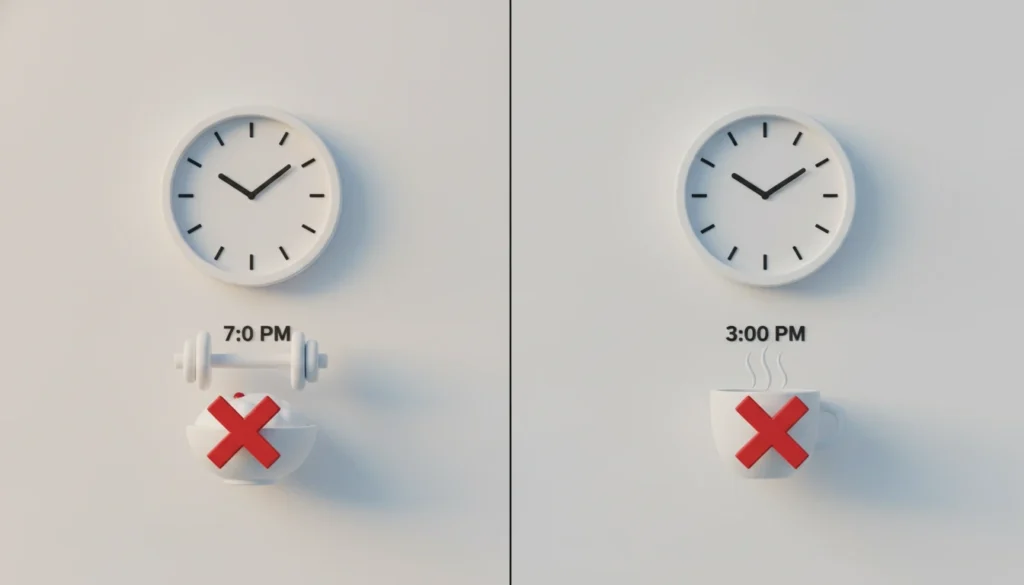
While the diagnostic rule focuses on medical pathology, the 3-3-3 rule for better sleep (also known as the 3-3-3 sleep optimization method) is a behavioral framework designed to maximize sleep quality, particularly slow-wave deep sleep. This rule dictates three specific behavioral cut-offs: avoid intense exercise 3 hours before bed, consume your last heavy meal 3 hours before bed, and establish a strict no caffeine after 3pm sleep rule.
This 3-3-3 rule sleep hygiene protocol has gained massive traction for its simplicity and physiological effectiveness. By adhering to this 3-3-3 bedtime routine, you align your daily habits with your body’s natural circadian rhythm. The directive to avoid exercise 3 hours before bed ensures that your core body temperature has sufficient time to drop, a mandatory physiological requirement for sleep onset. The no food 3 hours before bed sleep guideline prevents nocturnal gastric distress and keeps insulin levels stable, preventing midnight awakenings. Finally, avoiding caffeine after 3 PM allows your body to clear adenosine-blocking stimulants from your system before bedtime.
Why the 3-3-3 Optimization Rule Works (Science Behind It)
The science behind the 3-3-3 deep sleep exercise rule and dietary restrictions is rooted in core human biology. Core body temperature must drop by approximately 2 to 3 degrees Fahrenheit to initiate and maintain sleep. Vigorous cardiovascular or heavy resistance training elevates heart rate and core temperature. Stopping these activities 3 hours prior allows the autonomic nervous system to transition from a sympathetic (fight-or-flight) state to a parasympathetic (rest-and-digest) state.
Similarly, digestion is an energy-intensive process. Eating a large meal too close to bedtime forces the body to divert resources to the gastrointestinal tract, elevating metabolic rate and body temperature. This significantly fragments sleep architecture, reducing the time spent in deep, restorative NREM stages. For those utilizing biometric tracking, you can read more about how to analyze this data in our guide on How Do Sleep Trackers Measure Deep Sleep? Furthermore, the Sleep Foundation details how caffeine has a half-life of 5 to 6 hours. Consuming caffeine after 3 PM means a significant percentage of it is still active in your central nervous system at 10 PM, blocking adenosine receptors that signal sleepiness.
Step-by-Step: How to Apply the 3-3-3 Rule in Your Daily Routine
Implementing the 3-3-3 rule for deep sleep requires intentional scheduling. If your goal bedtime is 10:30 PM, your schedule should look like this: Wake up and consume your caffeine before the afternoon. By 3:00 PM, switch strictly to decaffeinated beverages or water. Schedule your daily workout for the early morning or late afternoon, ensuring you are entirely cooled down by 7:30 PM. Finally, eat your dinner around 7:00 PM, finishing up no later than 7:30 PM, leaving a clean three-hour fasting window before you turn off the lights. Adhering to this routine consistently reinforces your circadian rhythm, making sleep onset rapid and predictable.
3-3-3 Rule vs 3-2-1 Sleep Method (and 10-3-2-1-0 Rule)
In the realm of viral sleep hygiene, you may wonder how the 3-3-3 rule vs 3-2-1 sleep method compare, or how it stacks up against the complex 10-3-2-1-0 rule. The 321 sleep rule compared to 3-3-3 is slightly different: it suggests stopping eating 3 hours before bed, stopping work 2 hours before bed, and stopping screen time 1 hour before bed. The 10-3-2-1-0 rule expands this further by adding no caffeine 10 hours before bed and 0 snoozes in the morning. While these are excellent frameworks, the 3-3-3 optimization rule is often preferred by athletes and professionals who need a simpler, highly physiologically targeted approach focusing specifically on exercise, digestion, and caffeine metabolism.
Comparison of Popular Sleep Rules
| Rule Name | Core Components | Best For |
|---|---|---|
| 3-3-3 Optimization | No exercise (3 hrs), No food (3 hrs), No caffeine after 3 PM | Athletes, deep sleep focus, simple physiological alignment |
| 3-2-1 Method | No food (3 hrs), No work (2 hrs), No screens (1 hr) | Corporate professionals struggling with work-life balance and blue light |
| 10-3-2-1-0 Rule | No caffeine (10 hrs), No food (3 hrs), No work (2 hrs), No screens (1 hr), 0 snoozes | Individuals looking for a rigid, all-encompassing daily lifestyle overhaul |
The 3-3-3 Grounding Technique for Nighttime Anxiety and Sleep Onset
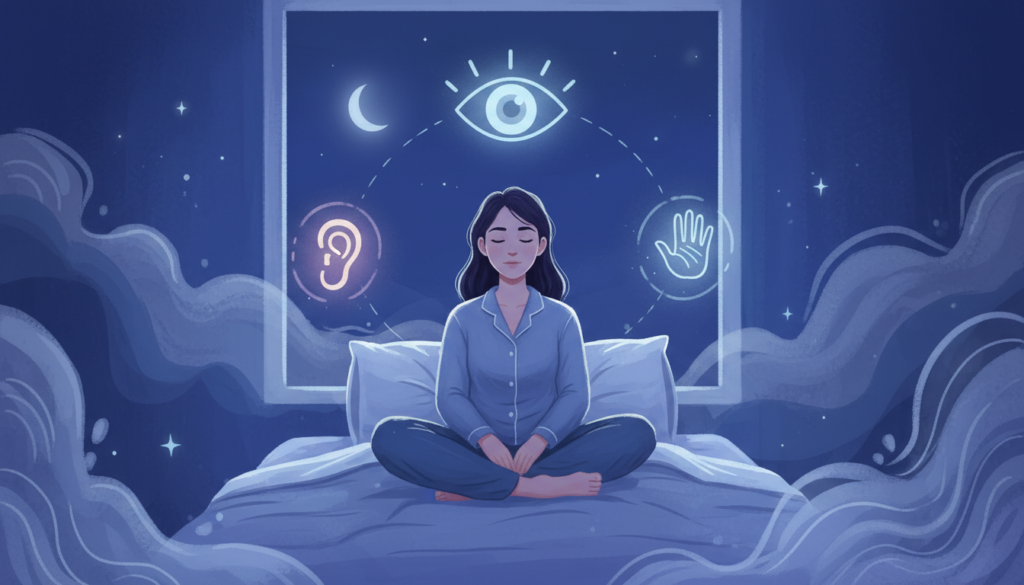
The third and final interpretation of this numerical sequence is the grounding 3-3-3 for bedtime. Often, individuals follow perfect sleep hygiene but are still kept awake by racing thoughts and anxiety. The 333 rule anxiety sleep method is a psychological tool derived from cognitive behavioral therapy. If you are lying in bed unable to sleep, you simply name 3 things you can see (even in the dim light, like a window, a clock, or a shadow), identify 3 things you can hear (the hum of an air conditioner, distant traffic, your own breath), and consciously move 3 body parts (wiggle your toes, roll your shoulders, clench and release your fists).
This viral 3-3-3 sleep tip is incredibly effective because it acts as a sensory circuit breaker. According to the National Institute of Mental Health (NIMH), somatic grounding techniques force the brain to shift its processing power away from the amygdala (which drives anxious, catastrophic thinking) and re-engage the prefrontal cortex and sensory cortex. By anchoring your awareness to the immediate physical environment, physiological arousal decreases, heart rate slows, and the brain is permitted to slip into the early stages of NREM sleep.
Benefits of Following the 3-3-3 Rule for Sleep Quality and Overall Health
Whether you are using the diagnostic criteria to get the medical help you need, the optimization rule to structure your evening, or the grounding technique to calm your mind, the benefits of the 3-3-3 frameworks are immense. Utilizing the 3-3-3 rule poor sleep interventions leads to increased daytime alertness, superior metabolic health due to optimized late-night digestion, and enhanced athletic recovery. Furthermore, structuring your routine allows for higher volumes of slow-wave sleep. To truly understand if your new routine is working, you must measure it. Discover more about tracking in our article: Are Sleep Trackers Accurate for Deep Sleep?
Common Mistakes People Make When Trying the 3-3-3 Rule
Despite its straightforward nature, people frequently stumble when implementing the 3-3-3 optimization rule. The most common mistake is miscalculating caffeine hidden in non-coffee products. Pre-workout supplements, certain teas, energy waters, and even dark chocolate contain significant caffeine that violates the no caffeine after 3 PM rule. Another mistake is assuming all exercise is bad before bed. The rule specifically targets intense exercise. Gentle stretching, restorative yoga, or a leisurely walk can actually promote sleep if done an hour before bed. Finally, individuals often misinterpret the 3-3-3 diagnostic rule, diagnosing themselves with chronic insomnia after just one bad week of sleep, leading to unnecessary sleep anxiety (orthosomnia).
Who Should Use the 3-3-3 Rule — and When to See a Doctor Instead
The optimization and grounding versions of the 3-3-3 rule are ideal for the general population looking to enhance their health in 2026. However, self-help rules have limitations. If you have rigorously applied the optimization routine and grounding techniques but still meet the diagnostic 3-3-3 insomnia criteria (3 nights/week, 3 months, 3 areas of life affected), it is time to seek professional medical intervention. These are clear signs you need insomnia treatment 3-3-3. Medical conditions such as obstructive sleep apnea, restless leg syndrome, or severe clinical depression cannot be cured by simply eating dinner earlier or doing a grounding exercise.
Red Flags for Medical Intervention
| Sign / Symptom | Action Required |
|---|---|
| Gasping or choking during sleep | Immediate evaluation for Sleep Apnea |
| Uncontrollable urge to move legs at night | Consult doctor for Restless Leg Syndrome |
| Meeting the Diagnostic 3-3-3 Criteria | Schedule appointment for CBT-I or medication evaluation |
| Falling asleep while driving or working | Urgent medical consultation required |
Real-Life Tips and Sample Evening Schedules Using the 3-3-3 Rule
To make the optimization rule actionable, here is a practical sample schedule for an individual aiming for an 11:00 PM bedtime. 3:00 PM: Finish your last cup of green tea or coffee. 5:30 PM: Hit the gym for your daily workout. 7:00 PM: Arrive home and begin preparing dinner. 7:30 PM: Eat a balanced meal rich in lean proteins and complex carbohydrates. 8:00 PM: Dinner is finished; the 3-hour digestion clock begins. Also, your post-workout body temperature begins its steady decline. 9:30 PM: Engage in relaxing activities (reading, light stretching). 11:00 PM: Lights out. If anxiety strikes in the dark, immediately deploy the 3-3-3 grounding technique (3 sights, 3 sounds, 3 movements) to ease into slumber.
Tracking Your Progress: How to Measure Improvements
In 2026, we have unprecedented access to biometric data. Once you begin applying the 3-3-3 rule for better sleep, you should track your baseline metrics. Look for decreases in sleep latency (the time it takes to fall asleep) and fewer midnight awakenings. Modern wearables track heart rate variability (HRV) and respiratory rates to estimate sleep stages. For an in-depth look at leveraging this data, review our guide on How to Improve Deep Sleep Using Sleep Tracker Data and learn the broader applications in How to Use Biometric Technology to Improve Your Sleep.
Limitations and What Science Says About Numerical Sleep Rules
While numerical rules like 3-3-3, 3-2-1, or 10-3-2-1-0 provide excellent scaffolding for building healthy habits, CDC sleep guidelines emphasize that sleep needs are highly individualized. Genetic chronotypes (whether you are a natural morning lark or a night owl) dictate that rigid timelines may need slight adjustments. The 3-3-3 rule is a powerful template, but science encourages individuals to use it as a starting point, tweaking the hours slightly to match personal metabolic rates and lifestyle demands. Ultimately, understanding what the 3-3-3 rule for sleep is—in all its diagnostic, optimization, and psychological forms—gives you a multifaceted toolkit to conquer poor sleep and reclaim your nights.
Expertise & Medical Disclaimer
Expert Insight & Medical Review: This article has been developed in alignment with 2026 clinical guidelines on sleep hygiene and behavioral sleep medicine. The diagnostic criteria discussed reflect standard chronobiological and somnological assessments used by board-certified sleep specialists.
Disclaimer: This content is for informational and educational purposes only, reflecting the clinical landscape of early 2026. It is not a substitute for professional medical advice, diagnosis, or treatment. Always seek the advice of your physician or other qualified health provider with any questions you may have regarding a medical condition or sleep disorder.
References & Sources
- National Institutes of Health (NIH) – Clinical Criteria for Insomnia Diagnosis: https://www.ncbi.nlm.nih.gov/pmc/articles/PMC5353813/
- Sleep Foundation – The Effects of Caffeine on Sleep Architecture: https://www.sleepfoundation.org/nutrition/caffeine-and-sleep
- National Institute of Mental Health (NIMH) – Grounding Techniques for Anxiety: https://www.nimh.nih.gov/health/topics/anxiety-disorders
- Centers for Disease Control and Prevention (CDC) – Individualized Sleep Guidelines: https://www.cdc.gov/sleep/about_sleep/how_much_sleep.html