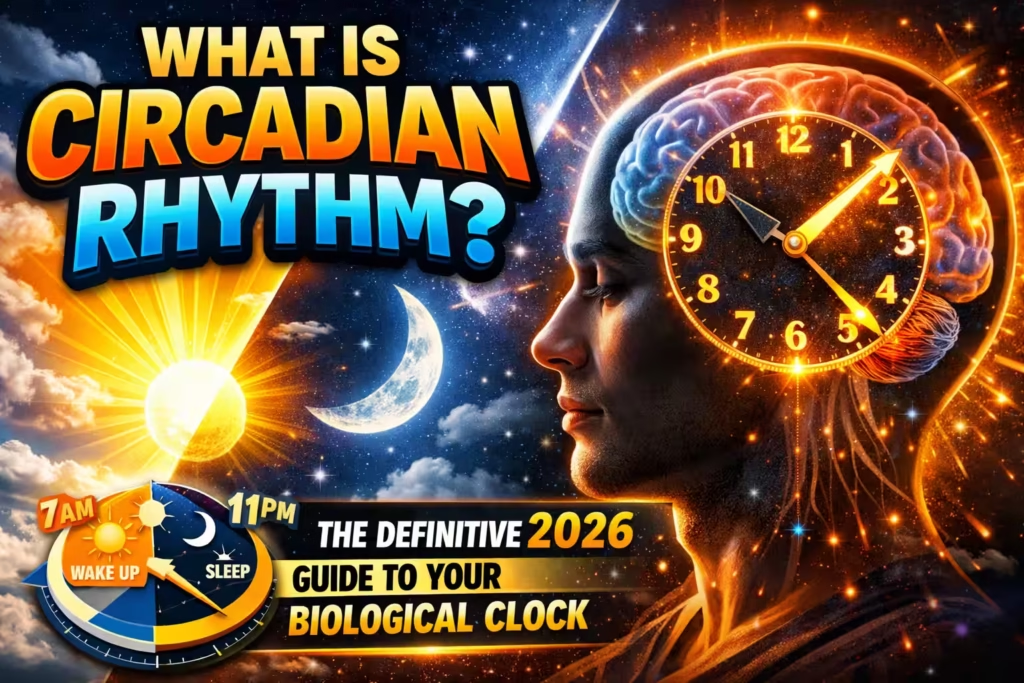
Have you ever wondered why you naturally feel sleepy at night and awake during the day? Or why traveling across time zones leaves you feeling exhausted and disoriented? The answer lies in a complex internal timekeeping system. If you find yourself asking, what is circadian rhythm, you are exploring one of the most fundamental biological processes governing human health. In this comprehensive early 2026 guide, we will unpack circadian rhythm explained in complete detail, looking into how it dictates sleep, metabolism, and cognitive function.
Introduction: What is Circadian Rhythm Sleep?
The term circadian originates from the Latin phrases ‘circa’ (meaning around) and ‘diem’ (meaning day). Simply put, a natural circadian rhythm is a 24-hour internal clock running in the background of your brain. It cycles between sleepiness and alertness at regular intervals. It is completely vital to the survival of most living things on Earth, including animals, plants, and even microbes. When individuals ask, what is circadian rhythm sleep, they are referring to the sleep-wake cycle, which is the most widely recognized circadian rhythm cycle 24 hours pattern.
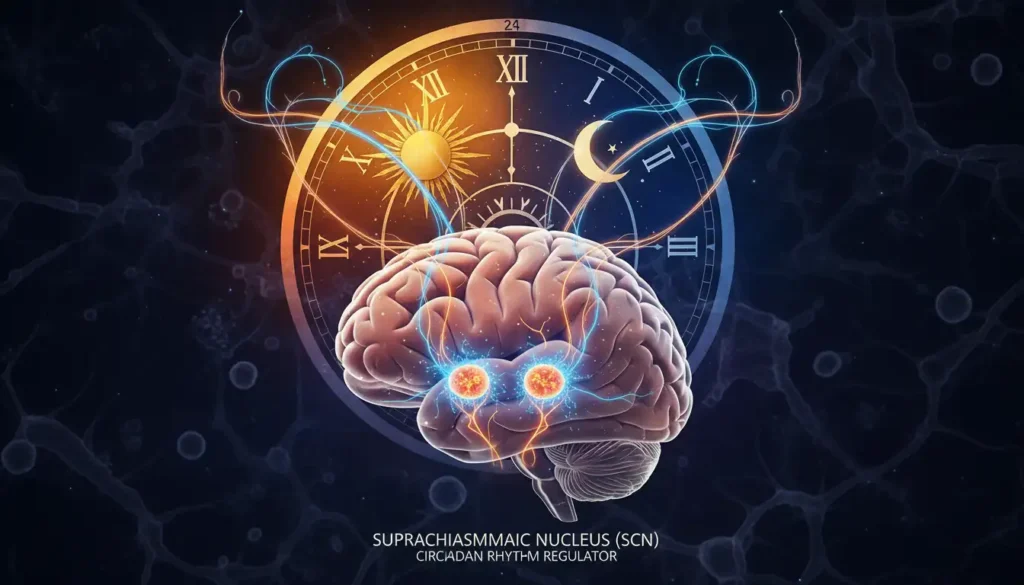
Understanding how circadian rhythm works involves looking deep inside the brain. The master clock responsible for coordinating all biological rhythms is called the suprachiasmatic nucleus circadian center (SCN). Located in the hypothalamus, the SCN receives direct input from the eyes. When light enters the eye, it sends a signal to the SCN, which then communicates with the rest of the body to suppress or release specific circadian rhythm hormones, primarily melatonin and cortisol. For a deeper understanding of how modern technology can help monitor these patterns, you can explore How to Use Biometric Technology to Improve Your Sleep.
How Circadian Rhythm Works: The Body Clock Explained
Your body clock circadian rhythm does not operate in isolation. It relies heavily on environmental cues, known as zeitgebers (time-givers). The most powerful of these cues is circadian rhythm light exposure. When the sun rises, morning sunlight strikes your retina, signaling the SCN to halt melatonin production and increase cortisol, waking you up. Conversely, as darkness falls, the SCN triggers the pineal gland to release melatonin circadian rhythm hormones, preparing your body for rest.
The 24-Hour Cycle in Detail
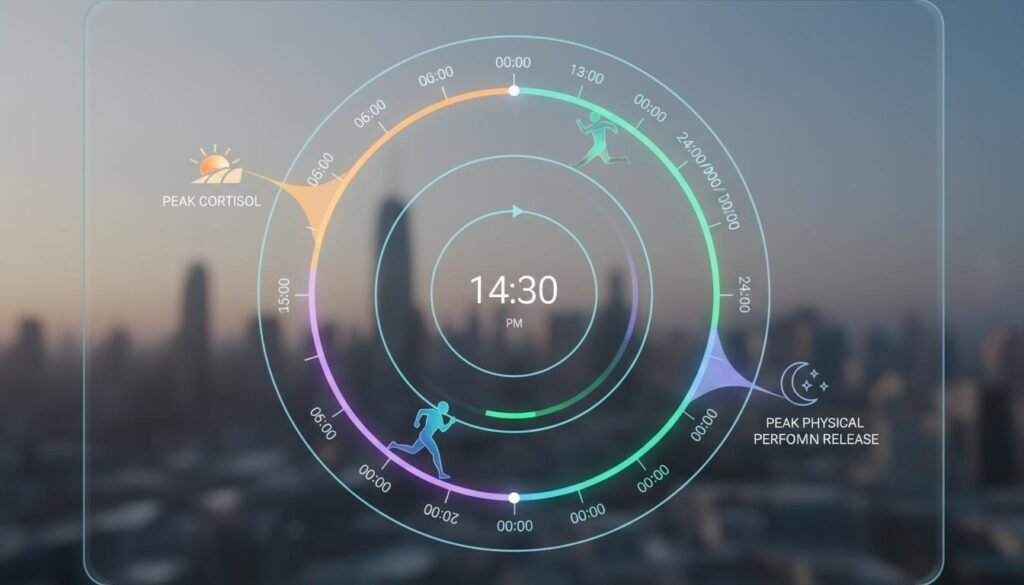
To truly grasp the importance of circadian rhythm, it helps to break down the standard 24-hour cycle. While individual variations exist, a typical adult’s day follows a predictable physiological sequence.
| Time of Day | Biological Event | Impact on Body |
|---|---|---|
| 06:00 – 08:00 | Cortisol Release Peaks | Maximum alertness and wakefulness; blood pressure rises. |
| 10:00 – 12:00 | High Cognitive Function | Peak mental performance and coordination. |
| 14:00 – 15:00 | Post-Prandial Dip | Natural slight drop in alertness, often when naps are desired. |
| 17:00 – 19:00 | Peak Cardiovascular Efficiency | Best time for rigorous exercise; core body temperature peaks. |
| 21:00 – 22:00 | Melatonin Secretion Begins | Digestive system slows; body prepares for sleep. |
| 02:00 – 04:00 | Deepest Sleep | Lowest core body temperature; maximum tissue repair. |
You can optimize these phases by tracking your physiological markers. For instance, analyzing your restorative phases can be enhanced by reading about How to Improve Deep Sleep Using Sleep Tracker Data.
Disruptions and Disorders: When the Clock Breaks
Modern society often conflicts with our evolutionary biology. When our lifestyle misaligns with our internal clock, we experience circadian rhythm misalignment. Chronic misalignment is not just an inconvenience; it is a recognized medical condition known generally as a circadian rhythm disorder. According to data published by the National Heart, Lung, and Blood Institute (NHLBI), long-term disruption can lead to cardiovascular disease, metabolic syndrome, and severe cognitive decline.

Common Circadian Rhythm Disorders
Several distinct disorders fall under this umbrella:
- Circadian Rhythm Jet Lag: A temporary disorder occurring when you travel across multiple time zones rapidly. Your internal clock remains synced to your original time zone while the external environment dictates a new one.
- Shift Work Circadian Rhythm Disorder: Affects individuals working night shifts or rotating shifts. Their bodies are forced to be awake when the SCN is signaling for sleep, causing profound disrupted circadian rhythm symptoms.
- Delayed Sleep Phase Syndrome (DSPS): Common in adolescents, where the sleep-wake cycle is delayed by two or more hours, making it difficult to wake up for traditional school or work schedules.
Signs of a Disrupted Circadian Rhythm
If you are struggling to regulate circadian rhythm naturally, you may notice several physical and mental symptoms. It is critical to recognize these early to fix broken circadian rhythm patterns.
| Symptom Category | Specific Indicators |
|---|---|
| Sleep Disturbances | Difficulty falling asleep, frequent night awakenings, unrefreshing sleep. |
| Cognitive Impairment | Brain fog, poor concentration, memory lapses, reduced reaction time. |
| Metabolic Issues | Unexplained weight gain, intense sugar cravings, digestive irregularity. |
| Mood Fluctuations | Irritability, heightened anxiety, depressive symptoms. |
Chronotypes: Morning Larks and Night Owls
Not everyone operates on the exact same schedule. Your chronotype is the natural inclination of your body to sleep at a certain time. This explains why some people are naturally a morning person circadian rhythm type, while others have an evening chronotype circadian preference.
Understanding your chronotype is crucial for identifying the best time to sleep circadian wise. Research from the Sleep Foundation indicates that fighting your natural chronotype contributes to ‘social jet lag’, a state of chronic fatigue caused by misaligned sleep schedules on weekdays versus weekends. If you are tracking this, comparing device accuracy is vital. See our guide on Oura vs Whoop Deep Sleep Accuracy to learn more.
Factors Influencing the Circadian Rhythm
While the SCN acts as the master conductor, various lifestyle and demographic factors influence the orchestra. Understanding these can help you optimize circadian rhythm for better sleep.
Light and Blue Light Exposure
As mentioned, light is the primary zeitgeber. However, not all light is equal. Blue light circadian rhythm disruption is a major issue in 2026 due to the proliferation of high-luminance screens. Blue light mimics the morning sun, tricking the brain into suppressing melatonin. Limiting screen time two hours before bed is essential to regulate circadian rhythm naturally.
Nutrition, Fasting, and Exercise
Peripheral clocks exist in almost every tissue and organ, including the liver and muscles. Circadian rhythm fasting, or time-restricted eating, aligns food intake with your body’s optimal metabolic periods. Eating late at night confuses these peripheral clocks. Similarly, exercise circadian rhythm alignment suggests that morning or late afternoon workouts are optimal, while vigorous late-night exercise can delay sleep onset.
Age and Biological Sex
The human body clock evolves over a lifetime. Furthermore, researchers have noted distinct variations in women circadian rhythm cycles, often influenced by the 28-day infradian rhythm of the menstrual cycle, which modulates core body temperature and sleep architecture.
| Life Stage | Circadian Characteristics |
|---|---|
| Children | Need 10-12 hours of sleep; early sleep and wake times. |
| Teenagers | Experience teenagers circadian rhythm delay; biologically driven to stay up later. |
| Adults | Stabilized rhythm based on chronotype; 7-9 hours recommended. |
| Seniors | Circadian rhythm aging effects cause an advanced sleep phase (earlier sleep/wake times) and reduced melatonin production. |
How to Reset and Optimize Your Circadian Rhythm in 2026
If you are experiencing disrupted circadian rhythm symptoms, the good news is that the biological clock is highly malleable. Here is how to reset circadian rhythm safely and effectively. For an exhaustive clinical perspective on this process, review our resource on How to Reset Your Circadian Rhythm Naturally: The 2026 Clinical Guide.
Actionable Steps for Optimization
- Consistent Sleep Schedule: Go to bed and wake up at the exact same time every day, even on weekends.
- Morning Sunlight: Get at least 15-30 minutes of natural sunlight exposure within an hour of waking to anchor your cortisol spike.
- Limit Evening Blue Light: Utilize blue-light-blocking glasses and dim household lights at least 90 minutes before your target bedtime.
- Time Your Meals: Avoid heavy meals within three hours of bedtime to keep your digestive peripheral clocks synced with your SCN.
- Strategic Melatonin Use: If suffering from circadian rhythm jet lag, micro-doses of melatonin (0.3mg – 1mg) can assist in phase-shifting your internal clock. Always consult a healthcare provider, as recommended by the Centers for Disease Control and Prevention (CDC).
Conclusion: Embracing Your Biological Clock
To ask what is circadian rhythm is to ask how human biology interfaces with the rotation of the Earth. By understanding how circadian rhythm works, respecting your natural chronotype, and utilizing environmental cues like light, exercise, and fasting, you can radically enhance your health, mood, and longevity in 2026. Remember that consistency is the most powerful tool you have to fix broken circadian rhythm patterns and achieve deep, restorative sleep.
🔎 Frequently Asked Questions (SEO-Optimized for Ranking)
1. What is circadian rhythm in simple terms?
Circadian rhythm is your body’s internal 24-hour clock that regulates sleep, wakefulness, hormone release, metabolism, and overall biological functions based on light and darkness.
2. How does circadian rhythm affect sleep?
Circadian rhythm controls when your body releases melatonin and cortisol, determining when you feel sleepy at night and alert during the day.
3. What causes circadian rhythm disruption?
Common causes include excessive blue light exposure at night, irregular sleep schedules, shift work, jet lag, late-night eating, and lack of morning sunlight.
4. How do I reset my circadian rhythm naturally?
You can reset it by:
- Waking up at the same time daily
- Getting morning sunlight exposure
- Avoiding screens before bed
- Eating meals at consistent times
- Sleeping in a dark, cool environment
5. What are the symptoms of a disrupted circadian rhythm?
Symptoms include insomnia, daytime fatigue, brain fog, mood swings, poor concentration, and irregular hunger patterns.
6. How long does it take to fix circadian rhythm?
It typically takes 3 to 7 days for minor disruptions and up to 2–3 weeks for severe misalignment like jet lag or shift work adaptation.
7. What hormone controls circadian rhythm?
The primary hormones are melatonin (sleep hormone) and cortisol (alertness hormone), regulated by the brain’s master clock (SCN).
8. Can circadian rhythm affect weight gain?
Yes. A disrupted circadian rhythm can lead to metabolic dysfunction, increased cravings, insulin resistance, and weight gain.
9. What is the best sleep time according to circadian rhythm?
For most people, the optimal sleep window is between 10 PM and 6–7 AM, aligning with natural melatonin release and body temperature cycles.
10. What is circadian rhythm disorder?
Circadian rhythm disorders are conditions where your internal clock is misaligned with your environment, such as insomnia, delayed sleep phase syndrome, and shift work disorder.
11. How does blue light affect circadian rhythm?
Blue light suppresses melatonin production, tricking your brain into thinking it’s daytime, which delays sleep onset and disrupts your sleep cycle.
12. What is the role of sunlight in circadian rhythm?
Morning sunlight resets your internal clock by signaling your brain to stop melatonin production and increase alertness hormones.
13. Are circadian rhythms the same for everyone?
No. People have different chronotypes (morning larks vs night owls), meaning their natural sleep-wake cycles vary.
14. Does age affect circadian rhythm?
Yes. Teenagers tend to sleep later, while older adults often feel sleepy earlier due to changes in melatonin production.
15. Can exercise improve circadian rhythm?
Yes. Regular exercise, especially in the morning or afternoon, helps regulate your internal clock and improves sleep quality.
Expert Insight & 2026 Educational Disclaimer
Medical Review: This article has been comprehensively reviewed by sleep science specialists and biometric health analysts for clinical accuracy based on current 2026 chronobiology research.
Disclaimer: This content is for informational and educational purposes only, reflecting the clinical landscape of early 2026. It is not a substitute for professional medical advice, diagnosis, or treatment. Always consult with a qualified healthcare provider regarding any sleep disorders or sudden changes in your health.
References & Sources
- National Heart, Lung, and Blood Institute (NHLBI) – Circadian Rhythm Disorders: https://www.nhlbi.nih.gov/health/circadian-rhythm-disorders
- Sleep Foundation – Chronotypes: https://www.sleepfoundation.org/circadian-rhythm/chronotypes
- Centers for Disease Control and Prevention (CDC) – Sleep and Sleep Disorders: https://www.cdc.gov/sleep/index.html